
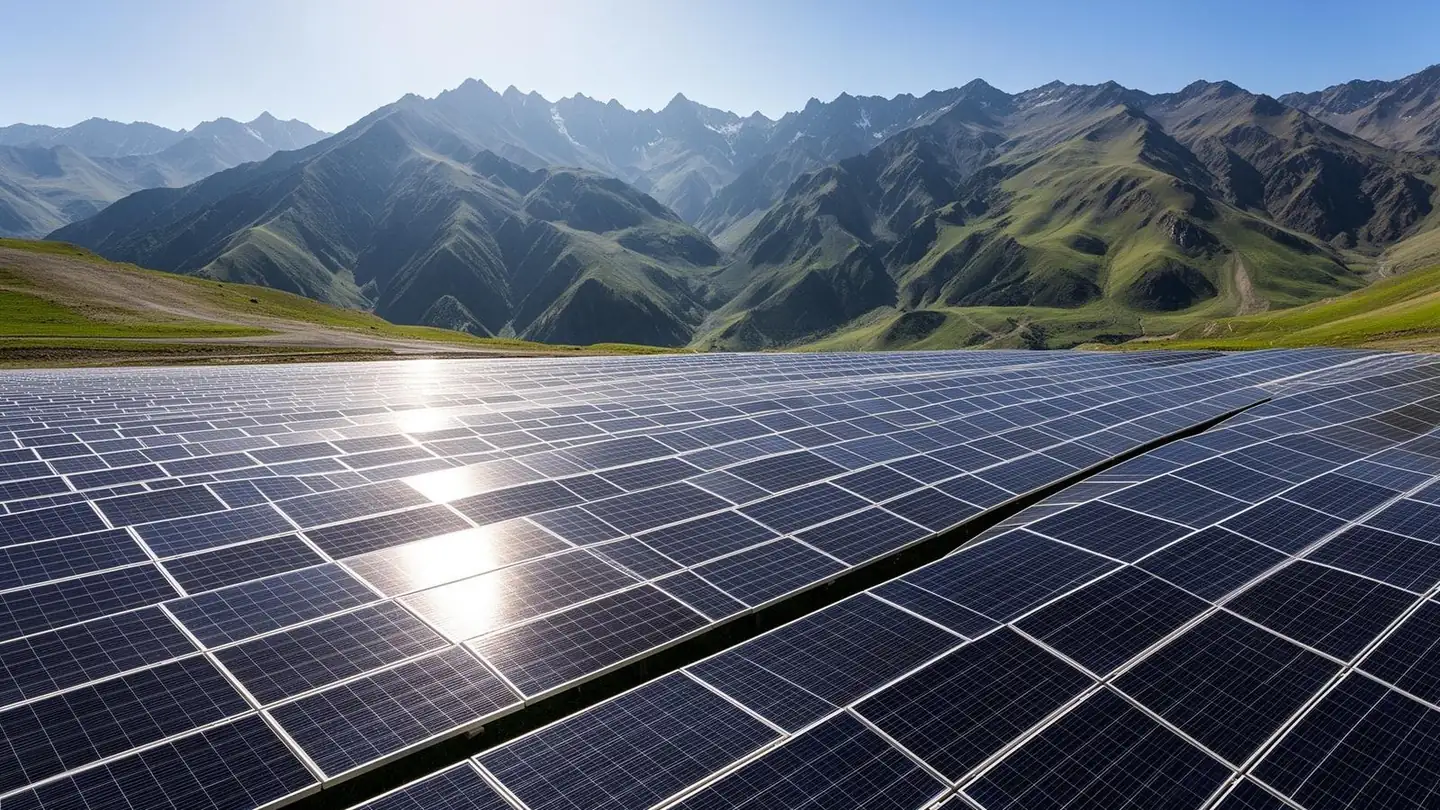
Solar PV
Solar power plant investment in Georgia
Advisory, due diligence and co-development for utility-scale solar PV projects in Georgia.
Solar is the fastest-moving part of Georgia's power sector. Projects of 5–50 MW are reaching bank financing and construction, while good grid connections and land are getting scarcer. We help utility-scale investors find, assess and build solar plants in Georgia, and we co-develop alongside them when a project fits. We built Mukhiani One, our own 2.5 MW solar plant in Tbilisi, in 2026, so our advice comes from the construction site, not only the spreadsheet.
Georgian solar in four numbers
Cap on new solar capacity the transmission grid can take, set by GSE
Term of the contracts for difference awarded in renewable auctions
Annual yield per kWp at a utility-scale plant in Kakheti
Plants up to this size need no GNERC generation licence
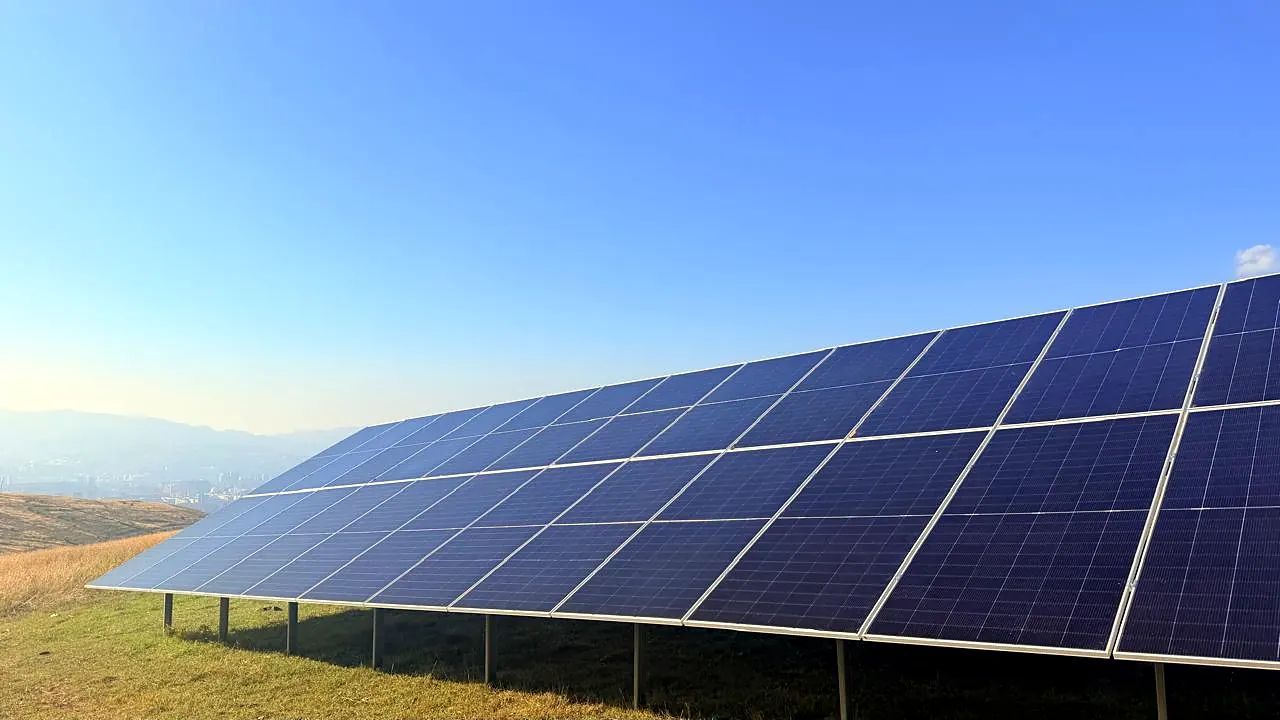
Mukhiani One: our own 2.5 MW solar plant in Tbilisi
Five 500 kW net-metering plants above the Tbilisi Sea, built by Shine Energy and financed by TBC Bank. Completed on 30 September 2026 for about $790,000 per MW, all-in.
- 2.5 MW AC, about 3.1 MWp
- About $300 per kWp EPC
- About 4.3 GWh a year expected
EPC partner: Shine Energy
Read the case studyTwo ways we work on solar
Advisory and due diligence
For investors and lenders buying, building or financing a solar plant in Georgia.
- Site and land screening: irradiation, slope, access, land title and category
- Grid connection: substation capacity, route, cost and timing with GSE or the distribution company
- Permits: environmental screening, construction permit, GNERC notification or licence
- Revenue: CfD auction terms, bilateral PPAs and day-ahead market exposure
- Technical review: P50/P90 yield, modules, inverters, EPC and O&M contracts
- Acquisitions of operating plants: actual vs. expected yield, availability, warranties
Co-development and co-investment
For investors who want a local partner with skin in the game.
- Origination of solar sites and early-stage projects in eastern Georgia
- Taking projects from site to ready-to-build together with the investor
- Running land, grid, permitting and auction workstreams on the ground
- EPC tendering and construction oversight
- Sharing development work and, where it fits, development risk
From site to operating plant
- 01
Screen
Irradiation, land, grid headroom and environmental red flags before money is spent.
- 02
Secure
Land rights, grid connection conditions and permits: the items that decide timing.
- 03
Contract
Offtake (CfD, PPA or merchant), EPC and O&M contracts, and lender requirements.
- 04
Build
Construction oversight, grid connection and commissioning.
- 05
Operate
Performance monitoring against the P50 case, market sales and reporting.
Solar in Georgia: common questions
Does a solar power plant in Georgia need a GNERC licence?
Plants up to 15 MW do not need a generation licence but must notify GNERC. Plants above 15 MW need a generation licence from GNERC.
How does a utility-scale solar plant in Georgia sell its electricity?
Three routes: the government's renewable auctions, which award 15-year contracts for difference; bilateral power purchase agreements with traders or large consumers; and the day-ahead market run by GENEX since July 2024. Many projects combine them.
Does a solar farm need an environmental impact assessment in Georgia?
Solar PV is not named in the annexes of Georgia's Environmental Assessment Code, but large ground-mounted plants should confirm the position early with the environmental authorities. Our environmental partner Revaz Enukidze leads this work.
What is the main bottleneck for new solar projects in Georgia?
Grid capacity. GSE, the transmission system operator, has capped how much new solar the grid can absorb at 0.5 GW, so a firm connection is the most valuable thing a project can hold.
How much electricity does a solar plant produce in Georgia?
Published figures for utility-scale plants in Kakheti point to about 1,500–1,600 kWh per kWp a year. Every site still needs its own irradiation study and a P50/P90 yield estimate.
What does Caucasus Energy Partners do on a solar project?
Two things: advisory and due diligence for investors and lenders, and co-development or co-investment alongside investors in projects that fit.
Further reading
- Mukhiani One: building a 2.5 MW solar plant in Tbilisi
- Solar panel prices in Georgia: cost per kW and payback
- How to develop a solar farm in Georgia
- Buying an operating solar plant: due diligence checklist
- Net metering in Georgia and the 2027 switch to net billing
- Solar energy in Georgia: market, yields and auctions
- Electricity market liberalisation and CfD auctions
- Power plant permits in Georgia
- Battery storage (BESS) in Georgia
- GNERC, the Georgian energy regulator