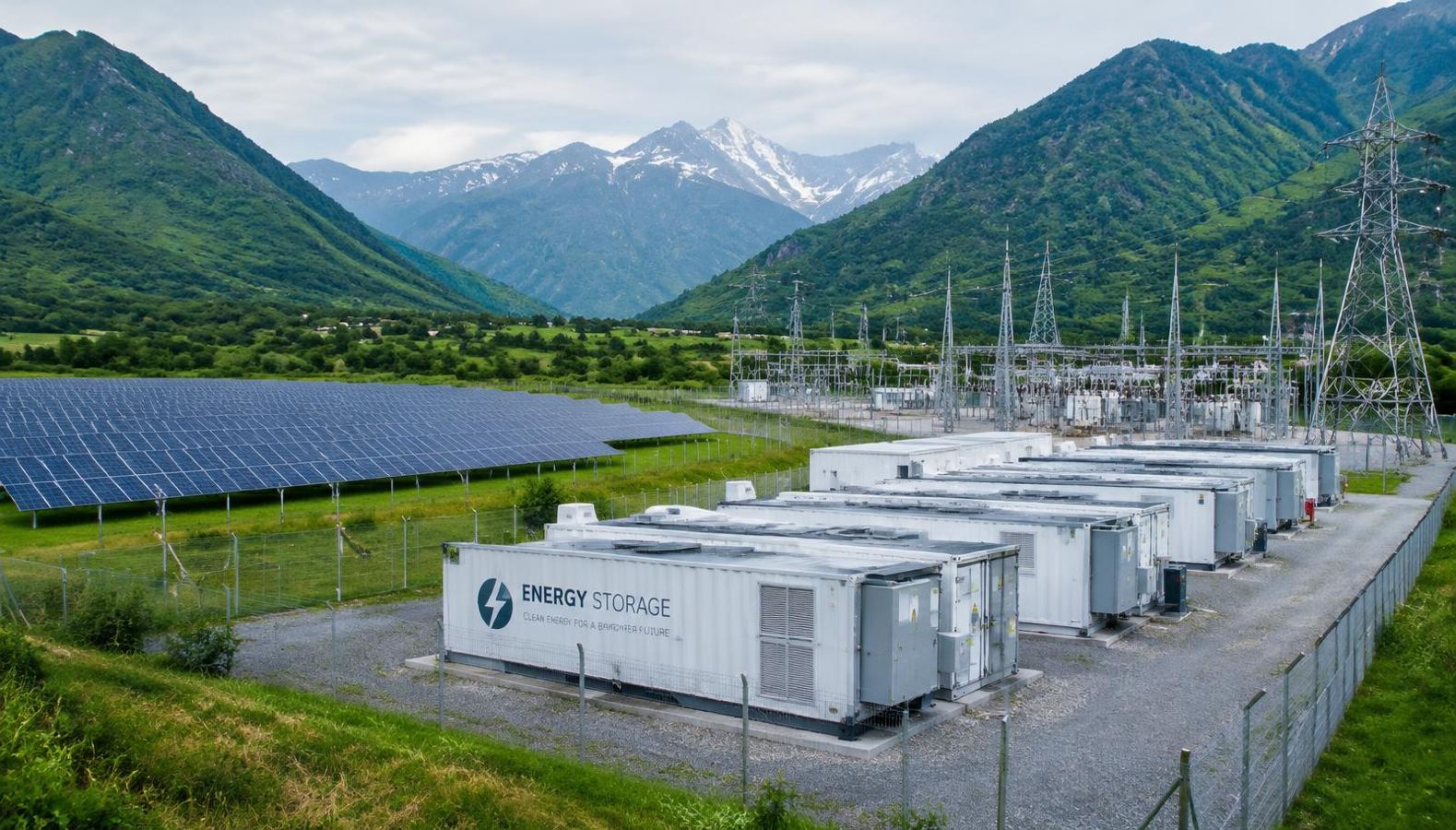
Battery energy storage (BESS) is about to arrive on Georgia's grid. The first large project, a 200 MW / 200 MWh battery at the Ksani substation near Tbilisi, is financed but still in procurement, the state has created auction quotas for wind and solar with storage, and businesses with rooftop solar are starting to add batteries. This guide covers where storage stands in Georgia, how batteries can earn money, what has to change before private storage is bankable, and what investors should check. Information is as of October 2026.
Why Georgia needs storage
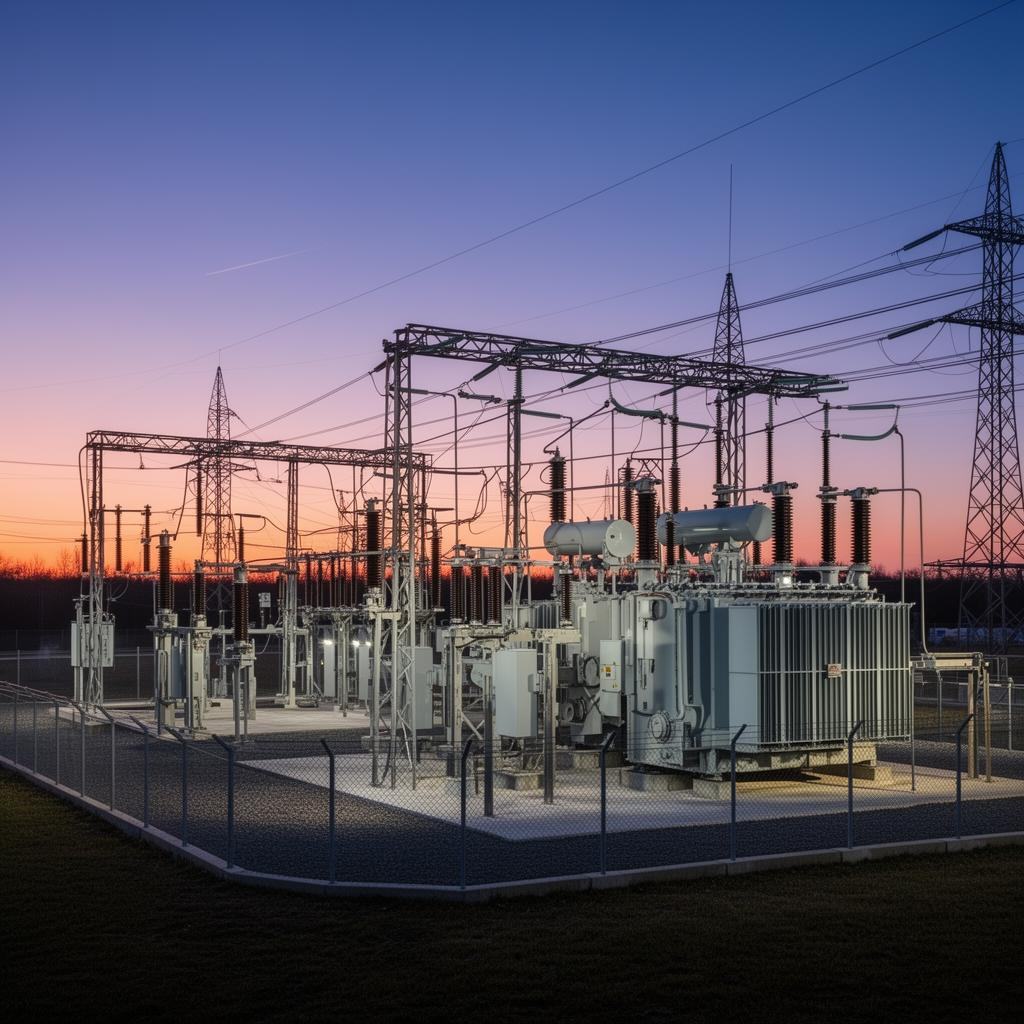
Georgia's power system relies on hydropower, which produces a surplus in spring and summer and too little in winter, when the country imports. Batteries cannot fix that seasonal gap, but they solve a different, growing problem: short-term flexibility. As wind and solar grow, the grid needs fast reserves to keep frequency stable. According to the Asian Development Bank, Ksani is meant to make GSE more self-sufficient in frequency reserves and reduce reliance on neighbouring systems for balancing support (source).
Storage in Georgia at a glance
| Item | Status |
|---|---|
| Ksani BESS | 200 MW / 200 MWh at the Ksani 500 kV substation, owned by GSE (source) |
| Financing | Asian Development Bank loan of USD 104 million for the Energy Storage and Green Hydrogen Development Project (source) |
| Ksani progress | Procurement concluded in November 2025 according to Georgian reporting, but no winning bidder had been named by late May 2026 (source) |
| Auction quotas | The second capacity auction offered 70 MW for wind with storage and 70 MW for solar with storage (source) |
| Grid limits | GSE caps new wind at 0.75 GW and solar at 0.5 GW, which makes flexibility more valuable (source) |
| Private projects | Behind-the-meter projects such as the 24 MWp First Light solar plant at Rustavi Azot are designed to be battery-ready (source) |
How a battery can earn money in Georgia
| Revenue stream | How it works | Maturity in Georgia |
|---|---|---|
| Frequency reserves and grid services | Fast response contracted by the system operator | The main purpose of Ksani; commercial rules for private providers still to come |
| Energy arbitrage | Charge in cheap hours, discharge in expensive ones on the day-ahead market | Hourly prices exist since July 2024 (source); spreads and liquidity are still developing |
| Co-location with wind or solar | Reduce imbalance costs and curtailment, firm output | Supported by the storage quotas in the auctions |
| Behind the meter | Store a business's own solar output for evening use | Attractive because self-consumed power is worth far more than exported power (source) |
What must change before private storage is bankable
The ADB has set out three conditions: storage should be defined and licensed as a distinct system asset, tariff rules should avoid double charging (paying grid fees both when charging and when the stored power is used), and regulation should let one battery provide several services (source). The Ksani project itself includes work on the legal and regulatory framework for storage (source).
Until those rules exist, lenders will want most of a standalone battery's revenue to be contracted, for example through an availability or tolling contract, rather than merchant trading.
Co-located or standalone?
| Co-located with wind or solar | Standalone on the grid | |
|---|---|---|
| Grid connection | Shared with the plant | Needs its own connection |
| Revenue | Firming, lower imbalance, less curtailment, auction quota | Grid services and arbitrage |
| Regulatory clarity | Higher: part of a generation project | Lower until storage rules are adopted |
| Main limit | Shares the plant's export capacity | Needs a bankable revenue model |
Batteries for businesses with solar
For commercial rooftop solar, the economics of a battery are driven by the gap between what a business pays for grid power, about 35 tetri per kWh, and what it receives for exported power under net billing, roughly 6–10 tetri (source). A battery that moves midday solar into the evening captures most of that difference. From 1 January 2027 new small solar plants move from net metering to net billing, which makes this gap matter even more (net metering guide). See also our guides to solar energy in Georgia and solar panel prices.
What investors should check
- Revenue stack: which services the battery will provide and which are contracted.
- Regulatory status: licensing, grid tariffs for charging, and access to reserve markets.
- Grid connection: capacity, cost and any limits on charging or discharging.
- Technology: cell chemistry, warranties, degradation curve and augmentation plan.
- Safety: fire protection, spacing and emergency response at the site.
- Contractor: EPC experience with grid-scale batteries and long-term service terms.
Our technical due diligence and regulatory teams help investors assess storage projects. See also our guides to Georgia's power grid, the electricity market and CfD auctions and wind power plants.
Looking at a storage or hybrid project in Georgia? Contact us.