Georgia sits at the centre of the South Caucasus electricity network, with interconnections to Turkey, Azerbaijan, Armenia and Russia. Combined with a strongly seasonal, hydro-dominated generation profile, this geography makes cross-border electricity trading a structural feature of the Georgian market rather than a marginal activity.
For investors in Georgian generation, cross-border trade affects revenue in two ways: it provides an outlet for summer surplus output, and it shapes the domestic price environment. This article explains how regional interconnection works today, the commercial mechanics of electricity export from Georgia and the risks investors should consider when export revenues form part of an investment case. It complements our separate analysis of the planned Black Sea submarine cable to Europe.
The seasonal logic of Georgian power trade
Georgian hydropower output follows snowmelt. Generation typically peaks between April and August and falls significantly in winter, when demand rises for heating. As a result:
- Spring and summer: Georgia often has surplus generation available for export.
- Autumn and winter: Georgia generally relies on domestic thermal plants and imports to meet demand.
Neighbouring systems have different profiles. Turkey's demand peaks in summer due to cooling load, which creates a natural complementarity with Georgian summer hydro surplus. This seasonal spread is the foundation of the commercial case for export.
Existing interconnections
| Border | Link | Notes |
|---|---|---|
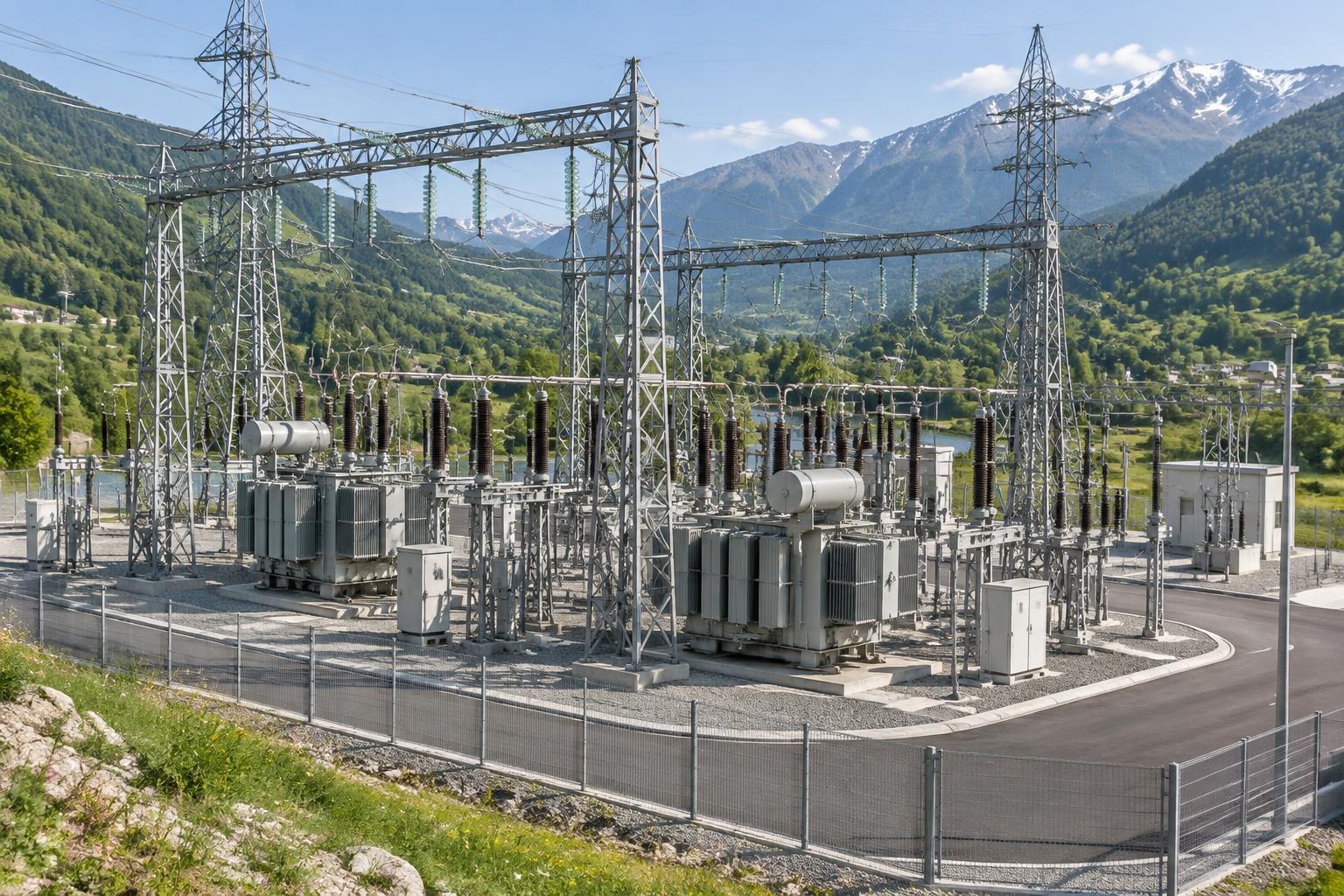
| Georgia–Turkey | 400 kV line with a back-to-back HVDC converter at Akhaltsikhe (source) | The systems are not synchronised, so the converter allows asynchronous exchange; Turkey's day-ahead market (EPİAŞ) gives a transparent price reference |
| Georgia–Azerbaijan | High-voltage interconnections | Bilateral exchanges and transit; Azerbaijan is a key partner in the green energy corridor |
| Georgia–Armenia | Interconnection, with reinforcement supported by international lenders | New lines and converter capacity aim to raise transfer capability |
| Georgia–Russia | Historical interconnections | Used for balancing and seasonal exchanges; sanctions compliance must be checked for any related revenue |
How exporting electricity from Georgia works
Cross-border capacity allocation
Interconnection capacity is limited and must be allocated under rules set by the system operators and regulators. Investors should understand how capacity is obtained, for how long, at what cost and whether it can be curtailed.
Trading and licensing
Exports are usually carried out by traders or generators with the right market participant status. Many independent power producers sell to a trader who manages the cross-border logistics rather than exporting directly.
Pricing and settlement
Export revenue equals the destination market price minus cross-border capacity costs, transmission and wheeling charges and the trader's margin. Settlement is often in hard currency, which can partly hedge lari depreciation for generators with dollar or euro debt.
Transit and wheeling
Georgia's location allows power to transit between neighbouring systems, which earns network revenue and supports further investment in interconnection.
How cross-border trade affects asset valuation
When an investment case relies partly on export revenue, test the following:
- Interconnection availability: outages of converter stations or lines directly reduce export volumes.
- Competition for capacity: as more Georgian generators target the same summer window, competition for limited capacity grows.
- Price spreads: export margins depend on the gap between Georgian and destination prices, which can narrow over time.
- Counterparty and payment risk: the trader's credit quality and payment terms matter.
- Regulatory change: export rules, priority access or domestic supply obligations can change the economics.
- Domestic market integration: since July 2024, GENEX has published hourly day-ahead prices (source), which will increasingly reflect cross-border opportunities.
A conservative approach models export revenue as upside, with a base case built on domestic contracted or market revenue. See our guide to the electricity market and CfD auctions.
Regional integration outlook
- Network reinforcement: GSE's ten-year development plan includes new lines and substations that raise transfer capacity to border points; see our guide to Georgia's power grid.
- Energy Community alignment: European market rules support more transparent, market-based capacity allocation.
- New renewable capacity: wind and solar change the seasonal balance and may reduce winter imports.
- Regional corridors: projects connecting the Caspian region, the South Caucasus and Europe could reshape long-term trade flows.
Practical steps for investors
- Get historical export volumes and prices from the asset or trader, not only management projections.
- Review capacity allocation rules and the asset's record in securing capacity.
- Assess the credit quality of the trading counterparty.
- Model converter and line outage scenarios.
- Check sanctions and compliance exposure for every trading route.
- Keep export upside out of base-case debt sizing.
Cross-border trade is a real source of value for Georgian generation, but only when its capacity, price, counterparty and regulatory risks are analysed explicitly. Caucasus Energy Partners supports investors with regulatory advice, revenue due diligence and transaction structuring. See also our hydropower risk framework.
Assessing a plant with export revenue? Contact us.
This article is general information, not legal, financial or investment advice. Interconnection capacities and trading rules change; check current conditions with qualified advisers and the system operators.