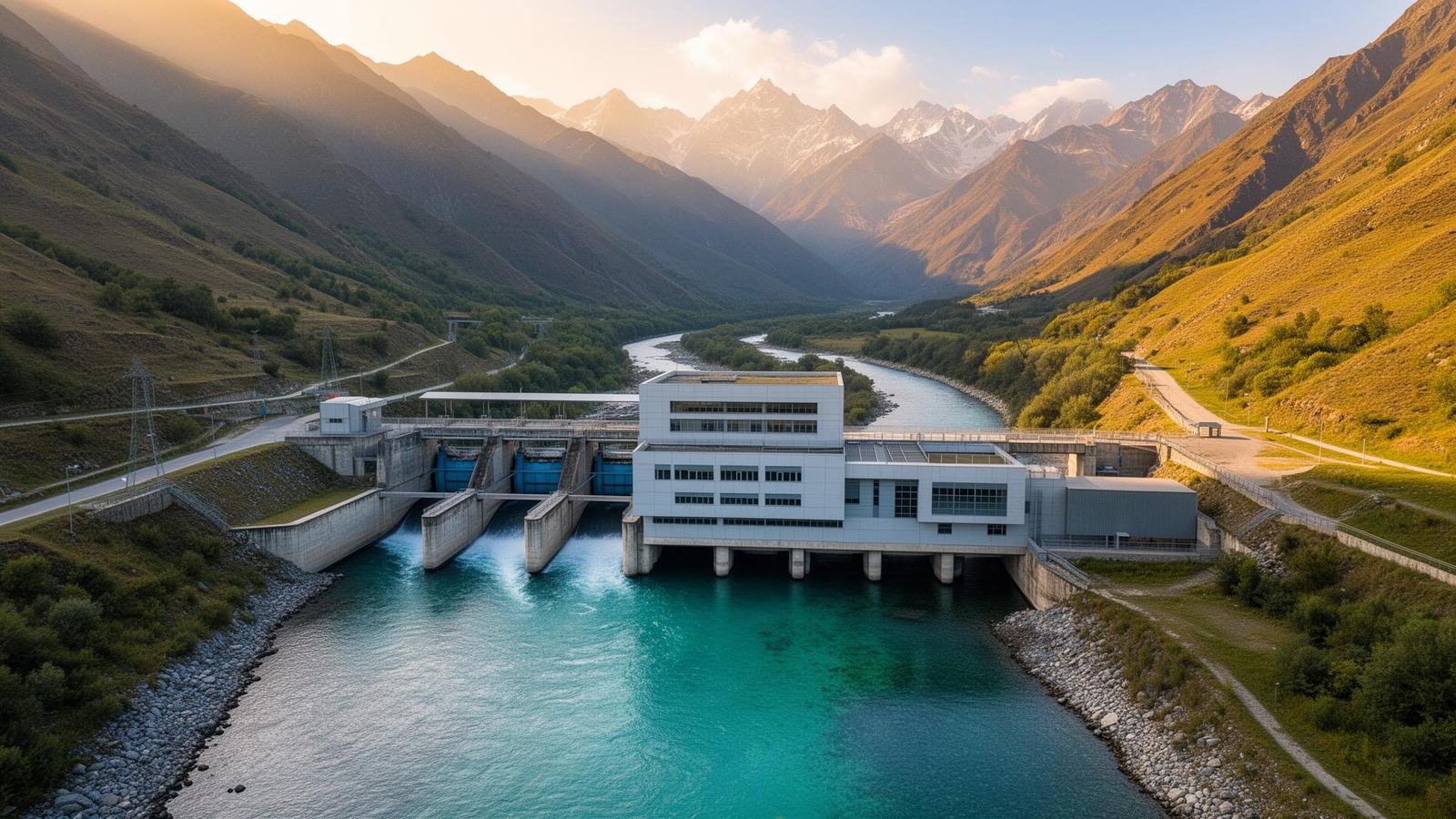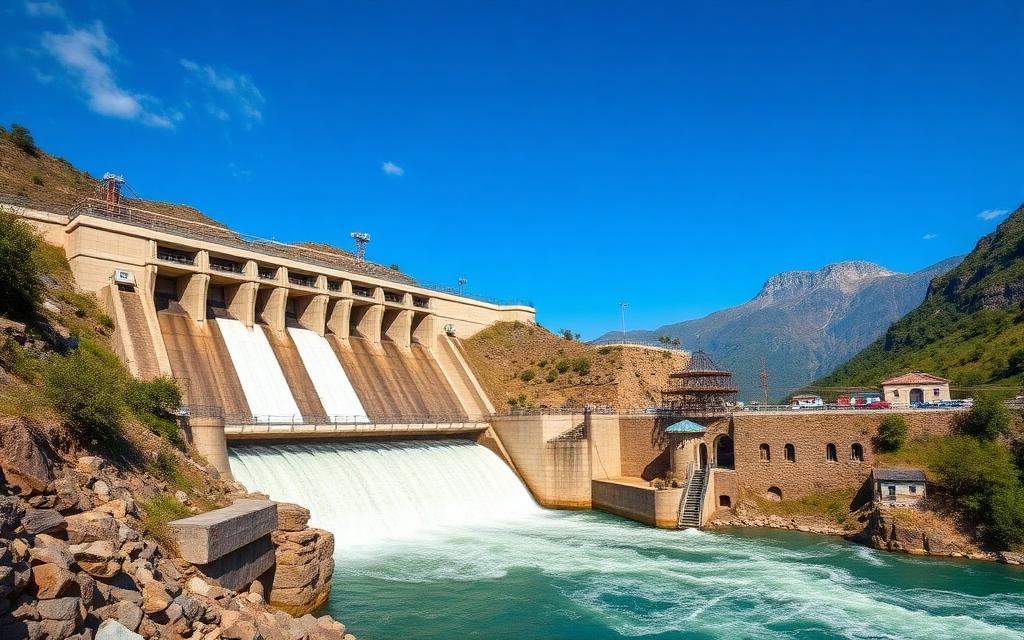
Hydropower is the backbone of Georgia's power system and the sector where most private energy investment has gone. It is also a business with risks that are easy to underprice: dry years, falling prices in the flood season, a crowded grid, community opposition and tunnels that do not behave as the geology report said. This framework sets out the seven risks we assess on every Georgian hydropower investment, with recent local examples and the usual mitigations. Information is as of October 2026.
The risk map at a glance
| Risk | What can go wrong | Main mitigation |
|---|---|---|
| Hydrology | Less water than modelled; climate-driven shifts in flow | Long data series, P90 for debt, conservative valuation |
| Offtake and price | PPA expires; low prices in the flood season | Contract mix, end-of-PPA scenario, storage or seasonal hedges |
| Grid | No capacity, curtailment, costly upgrades | Early connection offer, upgrade schedule in the model |
| Community and environment | Protests, legal challenges, permit conditions | Early engagement, benefit sharing, international standards |
| Construction and EPC | Geology, tunnel failures, delays, cost overruns | Ground investigation, fixed-price EPC, contingency |
| Currency and financing | GEL revenue against hard-currency debt | Matching currencies, hedging, debt sizing |
| Regulatory | Rule changes to support schemes or the market | Contract protections, scenario testing |
1. Hydrology risk
Every Georgian HPP is a bet on rainfall and snowmelt. The scale of the system's dependence is clear from Enguri HPP alone: it generated 4,036 GWh in 2025, about 29% of all electricity produced in Georgia (source).
- What to do: use at least 20 years of flow data where it exists, reconcile it with actual plant output, and build P50 and P90 cases.
- Watch for: short or synthetic data series, environmental flow obligations that were not in the original design, and climate trends that move flow from summer into spring.
2. Offtake and price risk
Hydro generates most in spring and summer, when the system is long on power and prices are lowest, and least in winter, when Georgia imports. Three things drive revenue risk:
- Contract expiry. Many plants built since 2007 rely on guaranteed PPAs; when these end, revenue moves to the market (source).
- Policy changes. The PPA incentive was suspended between 2017 and 2021 (source), and since 2023 new support has moved to competitive auctions.
- A market in transition. The day-ahead market launched in 2024, but rules are still evolving: intraday trading is suspended from 1 October 2026 to 1 July 2027 (source).
Mitigation: model a clear post-PPA scenario, use realised (seasonal) prices rather than annual averages, and consider whether winter capacity, storage or bilateral contracts improve the price profile. See our analysis of electricity market liberalisation and CfD auctions.
3. Grid risk
Georgia's grid is filling up. GSE has set limits on new variable renewable capacity of 0.75 GW for wind and 0.5 GW for solar (source), and hydro competes for the same lines in the spring flood.
- What to do: treat the connection offer as a core document, check who pays for upgrades and when they will be finished, and test whether the plant can export full output in peak months.
- Watch for: radial connections through a single line, substations already at capacity, and projects that assume upgrades with no funding behind them.
For the wider grid outlook, see our Georgia grid infrastructure guide.
4. Community and environmental risk
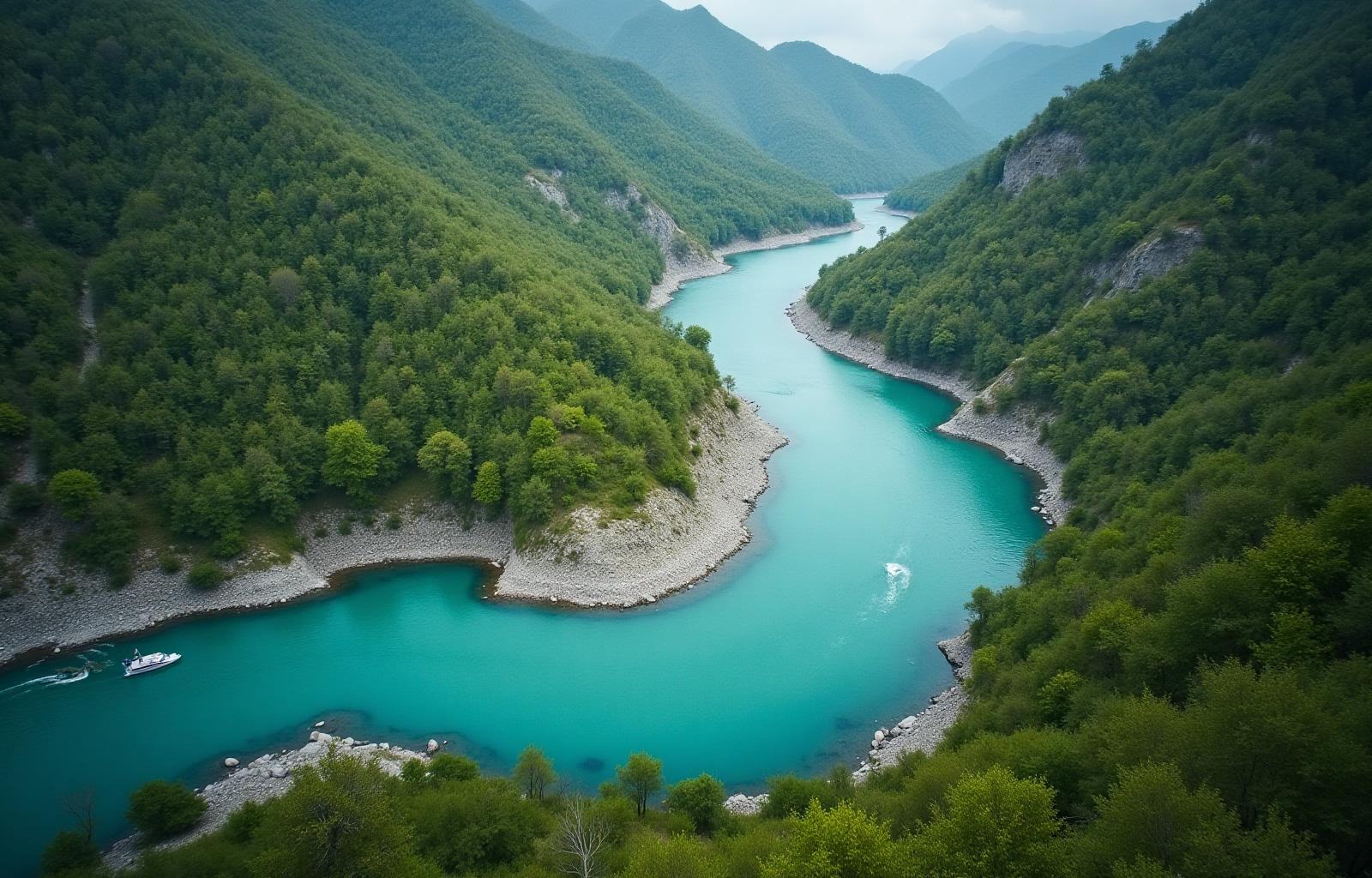
This is the risk that has stopped the largest projects. The Namakhvani HPP faced more than 200 days of protests, and in September 2021 the developer ENKA terminated its agreement with the government (source).
- What to do: engage before the scoping stage, agree environmental flows and water use for irrigation, share benefits locally and run a working grievance mechanism.
- Watch for: cumulative impacts from several plants on one river, unregistered land, and promises made by previous owners that were never kept.
Under the Environmental Assessment Code, hydropower plants of 5 MW or more need a full EIA with public hearings (source). See our guides to power plant permits and ESG in Georgian hydropower.
5. Construction and EPC risk
Georgia's mountain geology is complex. At Shuakhevi HPP in Adjara, tunnels collapsed two months after the plant began operating in 2017, and repairs took about two years (source).
- What to do: invest in ground investigation before the final design, prefer fixed-price EPC contracts with strong performance guarantees and delay damages, and hold a realistic contingency for underground works.
- Watch for: contractors without tunnelling experience in similar geology, and schedules that ignore the short construction season at high altitude.
6. Currency and financing risk
Plant revenue is increasingly earned in lari at market prices, while much project debt is in US dollars or euros. A weaker lari raises debt service without raising revenue.
- What to do: match the currency of debt to the currency of revenue where possible, check the currency of any PPA tariff, and size debt on downside exchange-rate cases.
7. Regulatory risk
Support schemes, market rules and grid codes have all changed in the last decade, and alignment with Energy Community rules will continue to bring changes.
- What to do: read the change-in-law and stabilisation clauses in PPAs and government agreements, follow GNERC and Ministry consultations, and run scenarios where support terms change. Our guide to GNERC explains who regulates what.
How to score the risks
A simple scoring system makes comparisons between projects easier. Rate each risk from 1 to 5 for likelihood and for impact, multiply the two, and focus diligence on anything that scores 12 or more. Re-score after mitigations: a risk that stays high after mitigation belongs in the price or the deal terms, not only in the risk register.
Our technical due diligence and ESG advisory teams apply this framework for investors and lenders. If you are buying an operating plant, see our step-by-step guide to buying a hydropower plant in Georgia.
Assessing a hydropower investment in Georgia? Contact us.