
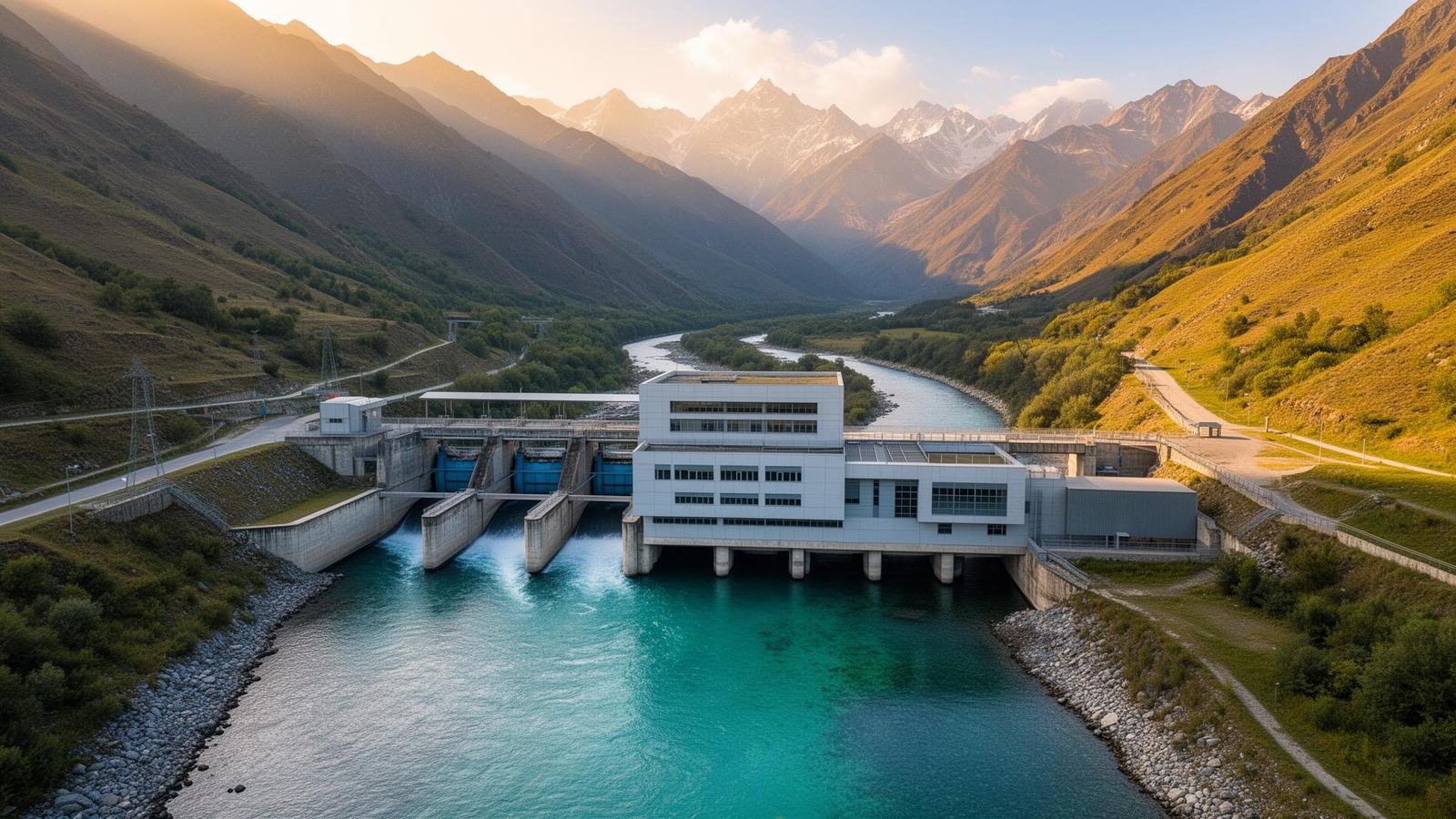
Enguri HPP is Georgia's largest power plant: 1,300 MW behind a 271.5 m concrete arch dam, one of the tallest in the world. In 2025 it generated 4,036 GWh, roughly 29% of all electricity produced in Georgia, and 44% of that output went to Abkhazia free of charge. This guide covers the plant's key facts, how its output is split, the rehabilitation programme and what it means for investors in the Georgian power market. Figures are as of October 2026.
Enguri HPP at a glance
| Parameter | Value |
|---|---|
| Installed capacity | 1,300 MW (source) |
| Generation in 2025 | 4,036 GWh (source) |
| Dam | Concrete arch, 271.5 m high, 605 m crest (source) |
| Reservoir (Jvari) storage | 1,110 million m³ total, 676 million m³ useful (source) |
| Rated head / discharge | 325 m / 450 m³ per second |
| Diversion tunnel | 15 km long, 9.5 m diameter |
| First power | 1978; completed 1987 (source) |
| Owner and operator | Engurhesi LLC, 100% owned by Georgia's Ministry of Economy |
Where is the Enguri dam?
The arch dam stands on the Enguri River near Jvari, in Tsalenjikha Municipality, in Georgian-controlled territory. The water then travels 15 km through a pressure tunnel to the powerhouse in the Gali district of Abkhazia, where the units and control room are located (source). The tailrace feeds the downstream Vardnili cascade before reaching the Black Sea.
This split location makes Enguri the one major facility where Georgian and Abkhaz staff work together every day.
How much of Georgia's electricity does Enguri produce?
Georgia generated 13.8 TWh of electricity in 2025 (source). Enguri's 4,036 GWh is about 29% of that, and the EBRD puts the Enguri–Vardnili complex at roughly 30% of the country's electricity needs (source).
Because the reservoir allows seasonal regulation, Enguri is also Georgia's main tool for shifting summer water into winter, when river flows drop and the system leans on gas-fired plants and imports.
The Abkhazia arrangement
Since the 1990s, an unwritten agreement gives Abkhazia 40% of Enguri's output and the rest of Georgia 60% (source). In practice the share has been higher:
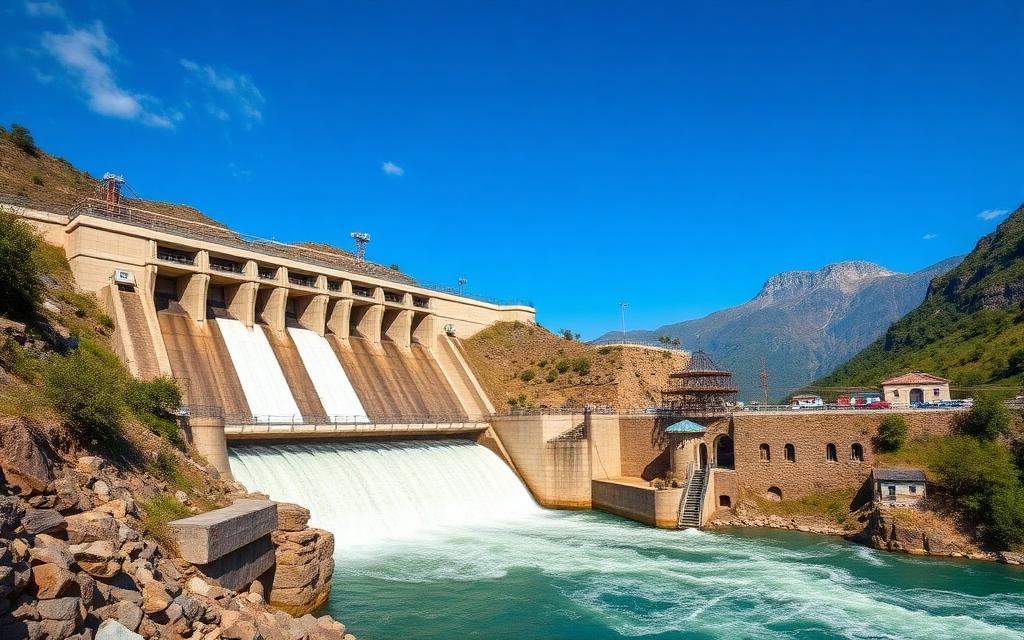
- In 2025 Abkhazia received 1,762 GWh, about 44% of generation, worth GEL 76.7 million in lost revenue for Engurhesi (source).
- Uncontrolled cryptocurrency mining, which began in 2016, drove Abkhaz demand up; mining is now banned there and the region's annual deficit has fallen to 600–700 million kWh from 1.1–1.2 billion kWh three years earlier (source).
- Since 1 April 2026 Abkhazia has been supplied entirely from Enguri, after Russian supplies covered winter gaps in previous years.
For the rest of Georgia, every extra GWh consumed in Abkhazia is a GWh that must be replaced by thermal generation or imports, which tightens the domestic market in winter.
Rehabilitation: from near-collapse to a 2027 finish
When Hydro-Québec engineers inspected the plant in 1994 they found it in "a rare state of dilapidation" (source). Rehabilitation has run in phases since 2003 (source):
| Period | Work |
|---|---|
| 2003–2009 | Phase 1: three units rehabilitated; dam and diversion tunnel repaired (2006) |
| 2009–2015 | Phases 2–3 completed |
| 2016–2021 | Phase 4 works |
| 2024–2027 | Final stage: seismic and structural safety, diversion tunnel, new electrical and hydromechanical equipment, dam monitoring roads |
The EBRD has been involved since 1998, and together with its donors has provided €205 million. In February 2024 it added a €28 million loan with a €7.05 million EU grant for dam stability, tunnel and penstock repairs, reduced headrace leakage and a fish passage (source). Once complete, the operator expects no major overhaul to be needed for 15–20 years.
In April 2026 the Minister of Economy described a "difficult but necessary" operational and management reform under way at the company (source).
What comes next on the Enguri River
- New Enguri HPP. In July 2026 the government approved the concept of a New Enguri HPP as a potential public-private partnership and an agreement for a full feasibility study (source). Capacity and cost have not been published.
- Upper Enguri. Further projects upstream, such as the planned Dizi HPP, have been proposed on the river's upper reaches.
What Enguri means for investors
- Winter is the scarce season. Enguri's reservoir is Georgia's main seasonal buffer, and Abkhaz consumption takes a growing share of it. Projects that produce in winter (wind, storage, flexible hydro) are worth more than their annual output suggests. See our guide to wind power plants in Georgia.
- Hydrology drives the whole market. Dry years at Enguri raise imports and prices; any hydro investment case needs long-term flow data and a hydrology risk view, as set out in our risk framework for hydrology, offtake and grid.
- Large hydro is state-led; mid-size is open. Enguri itself stays in state hands, but the 5–100 MW segment remains open to private buyers and developers. Our guide for institutional buyers of Georgian hydropower covers how those deals work.
Looking at a hydropower asset in Georgia? Contact our team about origination or technical due diligence.