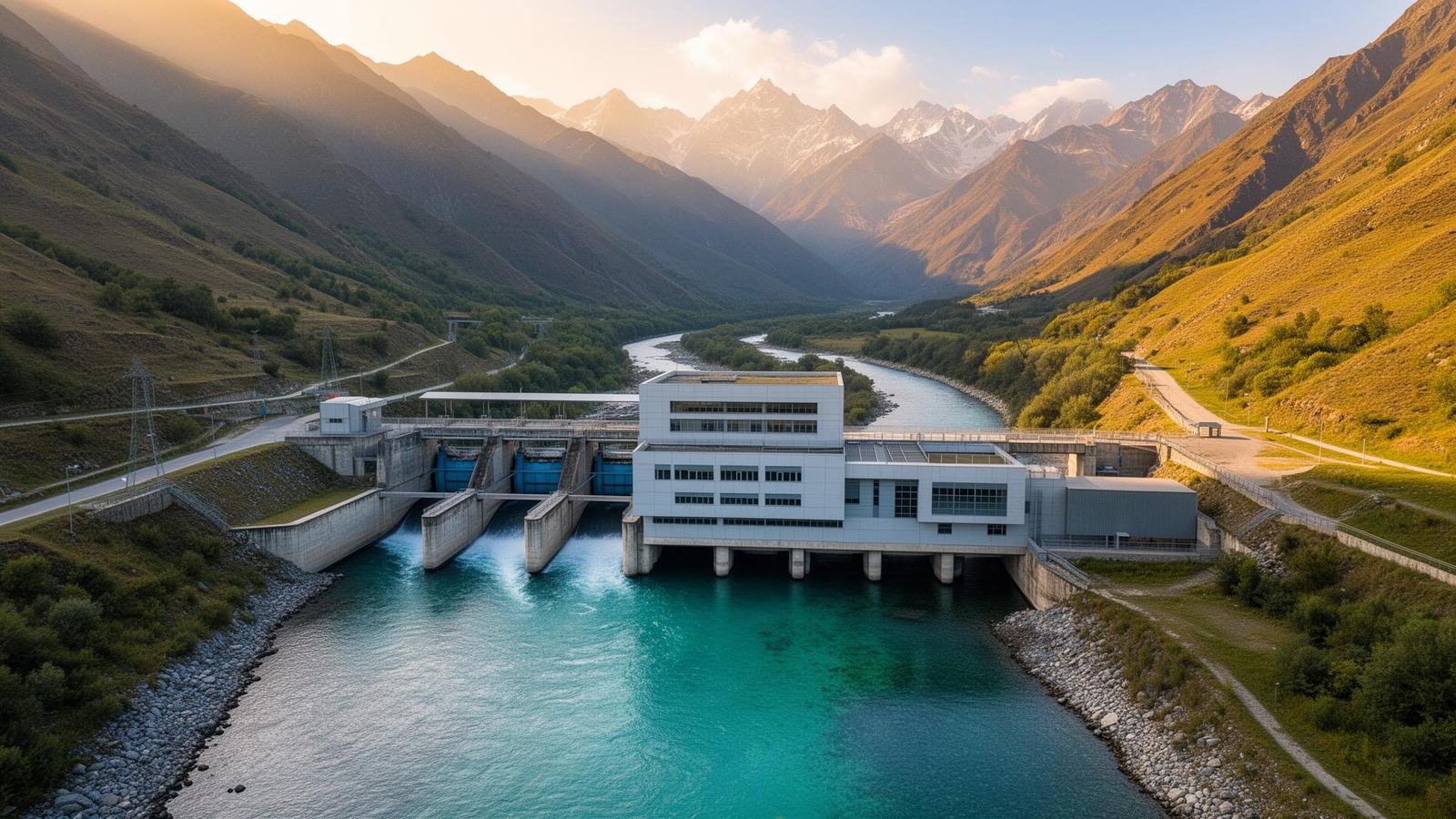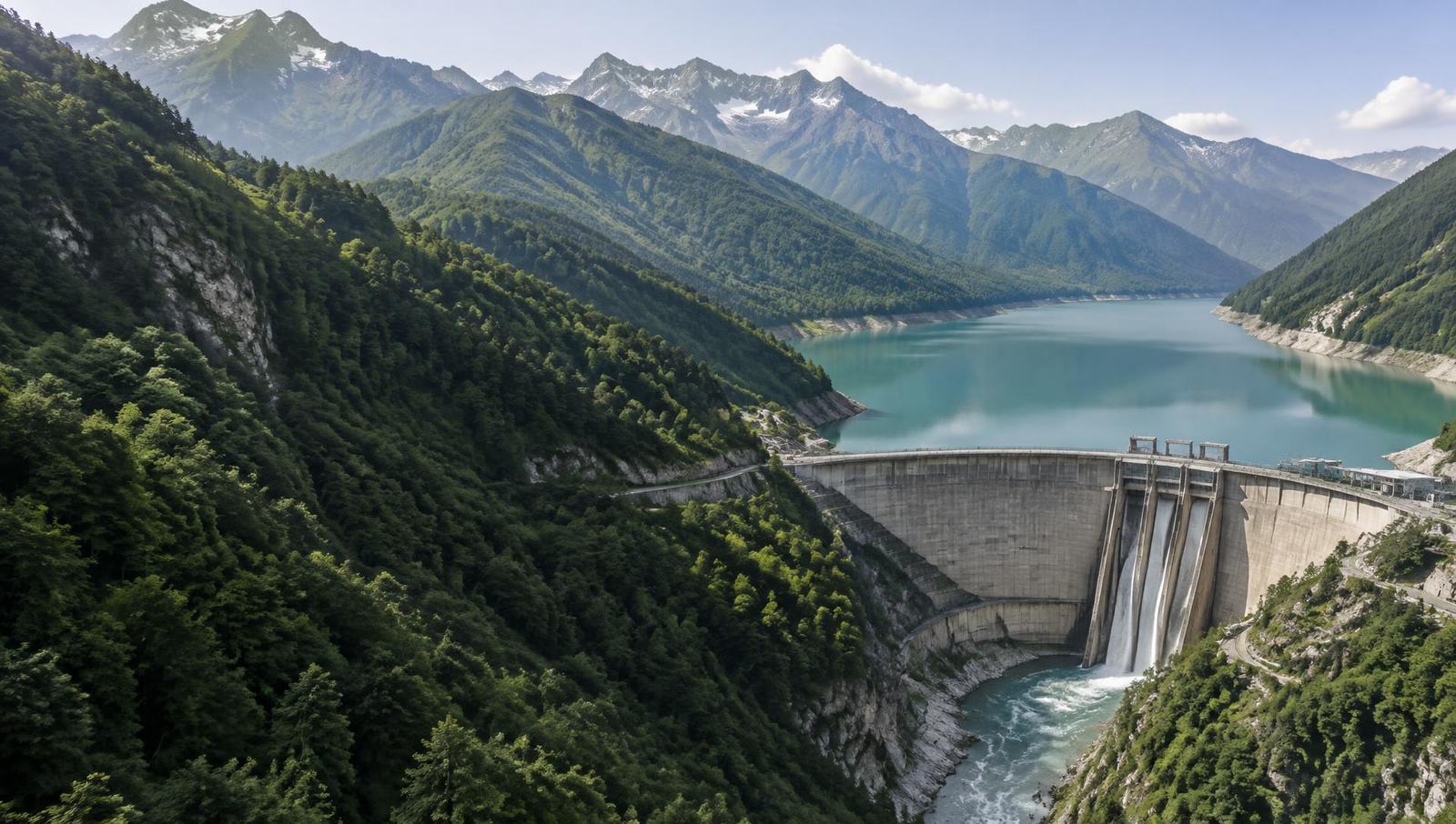
Hydropower generates about four-fifths of Georgia's electricity and makes up three-quarters of its installed capacity. For institutional investors, it is the most established route into the Georgian power market, with operating plants changing hands, new projects supported by 15-year contracts for difference and development banks active as lenders. This guide gives the market facts, the ways to invest, how revenue works today and what institutional buyers should focus on. Information is as of October 2026.
Georgia's hydropower market in numbers
| Indicator (2025) | Value |
|---|---|
| Installed capacity, all sources | 4,675 MW (source) |
| Of which hydropower | 3,489 MW, about 75% (source) |
| Total generation | 13.8 TWh, down 3% on 2024 (source) |
| Hydropower generation | 11 TWh, about 80% of the total (source) |
| Largest plant | Enguri HPP, 1,300 MW; 4,036 GWh in 2025 (source) |
| Capacity target | 9 GW by 2035 (source) |
Shares are our calculation from the published figures. Two facts shape the investment case: hydro output depends on rain and snowmelt (2025 output fell partly because of low water at the Enguri reservoir), and the system has a summer surplus and a winter deficit.
See our guide to Enguri HPP for Georgia's largest plant.
Ways to invest
| Route | What it involves | Main risks |
|---|---|---|
| Buying an operating plant | Acquiring a small or medium HPP, often with a legacy PPA | Hydrology, condition, PPA expiry |
| Building a new plant with a CfD | Winning a capacity auction and building under a 15-year contract for difference | Permits, construction, community acceptance |
| Platforms and portfolios | Buying several plants or a developer with a pipeline | Integration, mixed asset quality |
| Lending or co-investing | Alongside development banks such as the EBRD, ADB and IFC | Structure and currency |
How hydropower plants earn revenue today
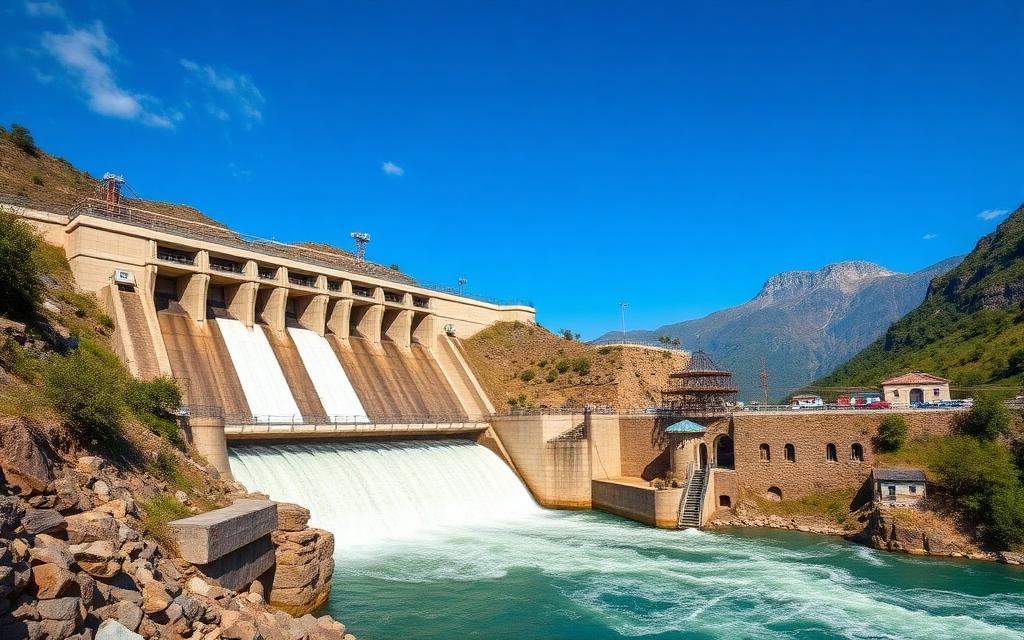
- Legacy PPAs. Since 2007, 83 plants with 1.4 GW have been built with guaranteed PPAs with ESCO, the state market operator (source). Each contract's remaining term and covered months decide how much of a plant's revenue is still contracted.
- CfDs for new plants. Auction winners receive a two-way contract for difference with ESCO for 15 years from commissioning, covering 8–12 months a year depending on technology (source). The 2023 auction had 15 hydro winners out of 27 (source); the second auction reserved 300 MW for regulating hydropower with reservoirs and 100 MW for other hydro (source).
- Market sales. Since July 2024, hourly day-ahead prices are set on GENEX (source). Hydro sells most in the months when prices are lowest.
- Exports. Summer surplus can be exported, mainly to Turkey; see our guide to cross-border electricity trading.
Regulation in brief
- Plants up to 15 MW do not need a generation licence but must notify the regulator; larger plants need a GNERC licence (source).
- Hydropower plants of 5 MW or more need a full environmental impact assessment; 2–5 MW plants go through screening.
- The market is moving to EU-style rules under the Energy Community.
See our guides to GNERC and power plant permits.
What institutional buyers should focus on
- Hydrology first. Value plants on independently checked P50 and P90 generation, not the design figure.
- Revenue after the PPA. Model the end of each contract and realised seasonal prices.
- Winter value. Plants with storage or winter output are worth more than run-of-river plants of the same size.
- Condition and capex. Tunnels, penstocks and turbines drive surprises.
- Community and E&S. Local opposition has stopped large projects; check commitments and grievances.
- Currency. Revenue is increasingly in lari while debt is often in dollars or euros.
- Exports as upside. The planned Black Sea submarine cable could help, but it has no final investment decision yet; do not put it in the base case.
For the full process, see our guides to buying a hydropower plant in Georgia, our hydropower risk framework and the electricity market and CfD auctions.
Caucasus Energy Partners helps institutional investors with deal origination, technical due diligence and transaction advisory in Georgian hydropower.
Looking for hydropower investments in Georgia? Contact us.