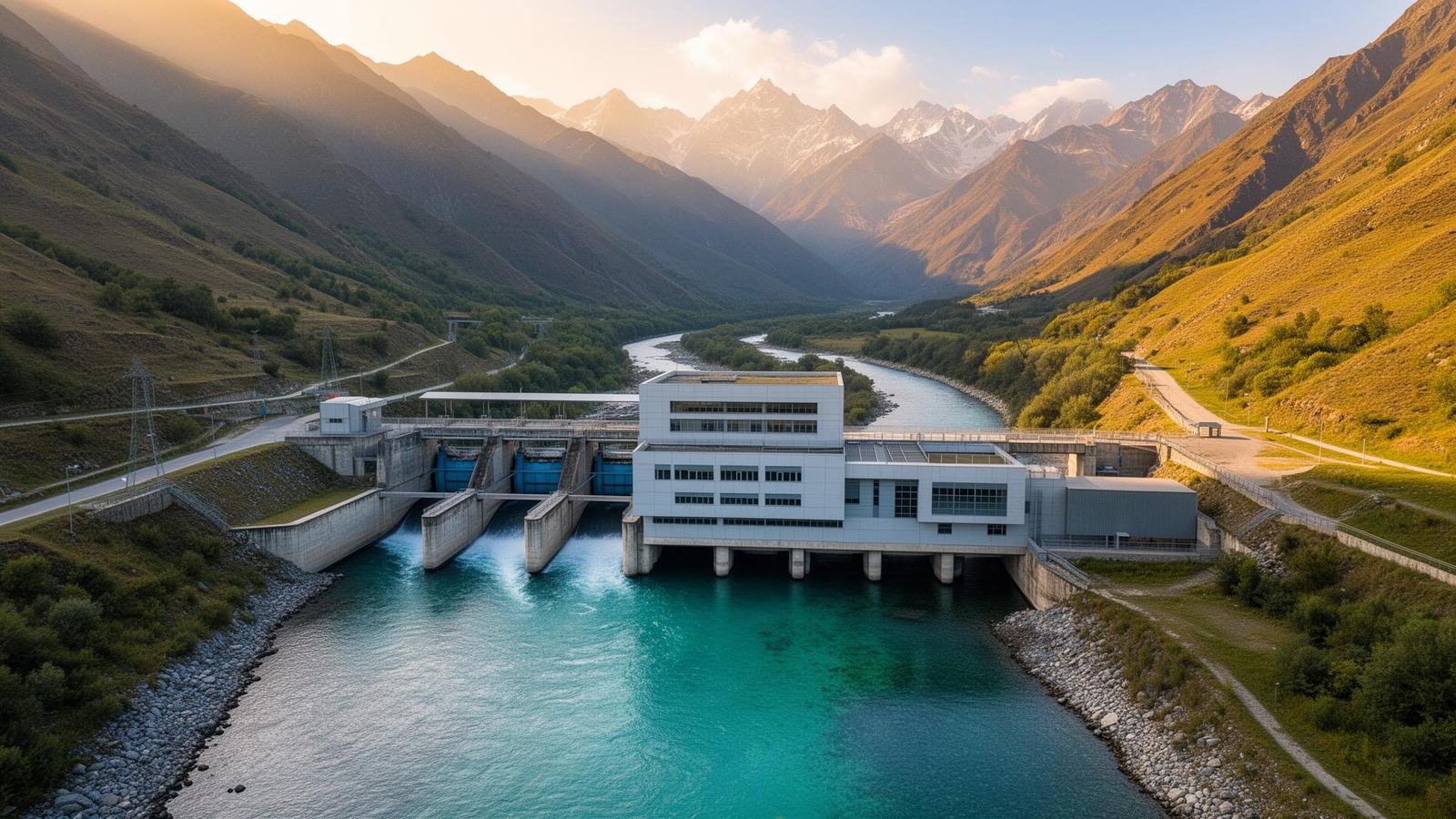
Buying an operating hydropower plant (HPP) is the most common way for investors to enter the Georgian power market. The value of the plant depends on a handful of things that a seller's model can easily overstate: how much water really reaches the turbines, the condition of tunnels and equipment, who buys the power after the current contract ends, and whether the permits and land rights are clean. This guide sets out how to organise due diligence on an HPP acquisition in Georgia, workstream by workstream. Information is as of October 2026.
Why hydropower plants change hands in Georgia
Georgia had about 4.7 GW of installed capacity in 2025 and targets 9 GW by 2035, according to Galt & Taggart (source). Since the government introduced guaranteed power purchase agreements (PPAs) in 2007, 83 power plants with 1.4 GW of capacity have been built with that support (source). Many of these small and medium HPPs are now ten or more years old, their original developers want to recycle capital, and their PPAs are approaching the end of their term. That creates a steady supply of plants for sale, but also a common risk: revenue that looked contracted becomes market revenue.
The six due diligence workstreams
| Workstream | Key question | Typical output |
|---|---|---|
| Hydrology and energy yield | How much will the plant really generate? | P50/P90 generation estimate, flow duration curve |
| Technical | What condition are the civil works and equipment in? | Site inspection report, capex and remaining-life plan |
| Revenue and market | Who buys the power, at what price, until when? | Revenue model under contract and market scenarios |
| Legal and regulatory | Are licences, permits, land and contracts clean and transferable? | Legal due diligence report, list of consents |
| Environmental and social | Are there compliance gaps or community issues? | E&S gap analysis against lender standards |
| Financial and tax | What is the business worth after all findings? | Updated valuation model, price adjustment items |
Run the workstreams in parallel, with one person owning the issues list. Findings from hydrology and technical work feed directly into the financial model, so agree a common data cut-off date early.
Hydrology: the main value driver
Generation is a function of river flow, and flow is the assumption sellers most often stretch.
- Compare three data sets: the original design hydrology, long-term gauge records from Georgia's hydrometeorological network where available, and the plant's actual metered generation since commissioning.
- Reconcile actual output with the design. If the plant has produced well below its design P50 for several years, find out whether the cause is lower flow, downtime, curtailment or wrong assumptions.
- Deduct environmental flow. The minimum flow set in the environmental permit reduces usable water, especially in winter.
- Test climate scenarios. Glacier retreat and changing snowmelt shift flow from summer towards spring, so stress-test the low-flow years.
- Use P90 for debt sizing and P50 for valuation, and say clearly which one the price is based on.
For a broader view of hydrology, offtake and grid risks, see our hydropower risk framework.
Technical condition
Most of the capex surprises in HPP deals sit underground or underwater.
- Headworks and intake: weir, gates, trash racks, sediment flushing, fish pass.
- Tunnels and penstocks: inspect where possible. At Shuakhevi HPP in Adjara, tunnels collapsed two months after the plant started operating in 2017, and repairs took about two years (source).
- Electromechanical equipment: turbine wear from sediment, generator insulation, transformer oil tests, protection relays and SCADA.
- Operations: availability and outage history, spare parts, O&M contract, staff and safety records.
The result should be a 10–15 year capex plan that the buyer, not the seller, has priced.
Revenue: who buys the power?
| Revenue route | What to check |
|---|---|
| Guaranteed PPA with ESCO | Remaining term, months covered, tariff and its currency, change-of-control consent |
| Renewable auction (CfD) | Contract terms, price, duration, delivery obligations |
| Day-ahead market on GENEX | Price history since trading began on 1 July 2024 (source); the intraday market is suspended from 1 October 2026 to 1 July 2027 (source) |
| Bilateral contracts | Counterparty credit, tenor, price indexation |
Run the valuation with a clear end-of-PPA scenario. Hydro output peaks in spring and summer, when prices are lowest, so the plant's realised price is usually below the annual average. Our guide to electricity market liberalisation and CfD auctions explains the market changes.
Legal and regulatory checks
- Licence or notification: plants above 15 MW need a GNERC generation licence; smaller plants must notify the regulator (source).
- Environmental decision: its conditions and compliance history, and whether it can be transferred to the buyer, for which the Environmental Assessment Code provides an accelerated 10-day procedure (source).
- Construction and commissioning documents: proof the plant was built as permitted.
- Land and access: ownership and leases registered in the Public Registry, including the intake, tunnel route, powerhouse, access roads and transmission line.
- Government agreements: where the plant was developed under a memorandum with the government, check its remaining obligations and the conditions for a change of owner.
- Contracts: grid connection agreement, PPA, O&M, loans and security, with every change-of-control consent listed.
For the full permit picture, see our guide to power plant permits in Georgia.
Environmental and social review
Check compliance with the environmental decision (especially environmental flow and fish passage), the grievance log and relations with nearby villages, and any open disputes over water use or land. If you plan to refinance with a development bank, measure the gaps against IFC or EBRD standards now; see our article on ESG in Georgian hydropower.
Red flags
- Actual generation consistently more than 10–15% below the seller's P50 without a clear explanation.
- No recent tunnel or penstock inspection.
- PPA ending within a few years while the model assumes contracted prices beyond it.
- Land along the tunnel or line route that is not registered.
- Unresolved complaints from nearby communities about water.
How long does it take?
With a complete data room, focused due diligence on a single small or medium HPP can usually be done in six to ten weeks, including a site visit during the low-flow season if timing allows. Portfolios and plants with weak records take longer.
Our transaction advisory and technical due diligence teams run these workstreams for buyers and lenders. See also our energy asset due diligence checklist, our guide for institutional hydropower buyers and transaction structures for Georgian energy assets.
Looking at a hydropower plant for sale in Georgia? Contact us.