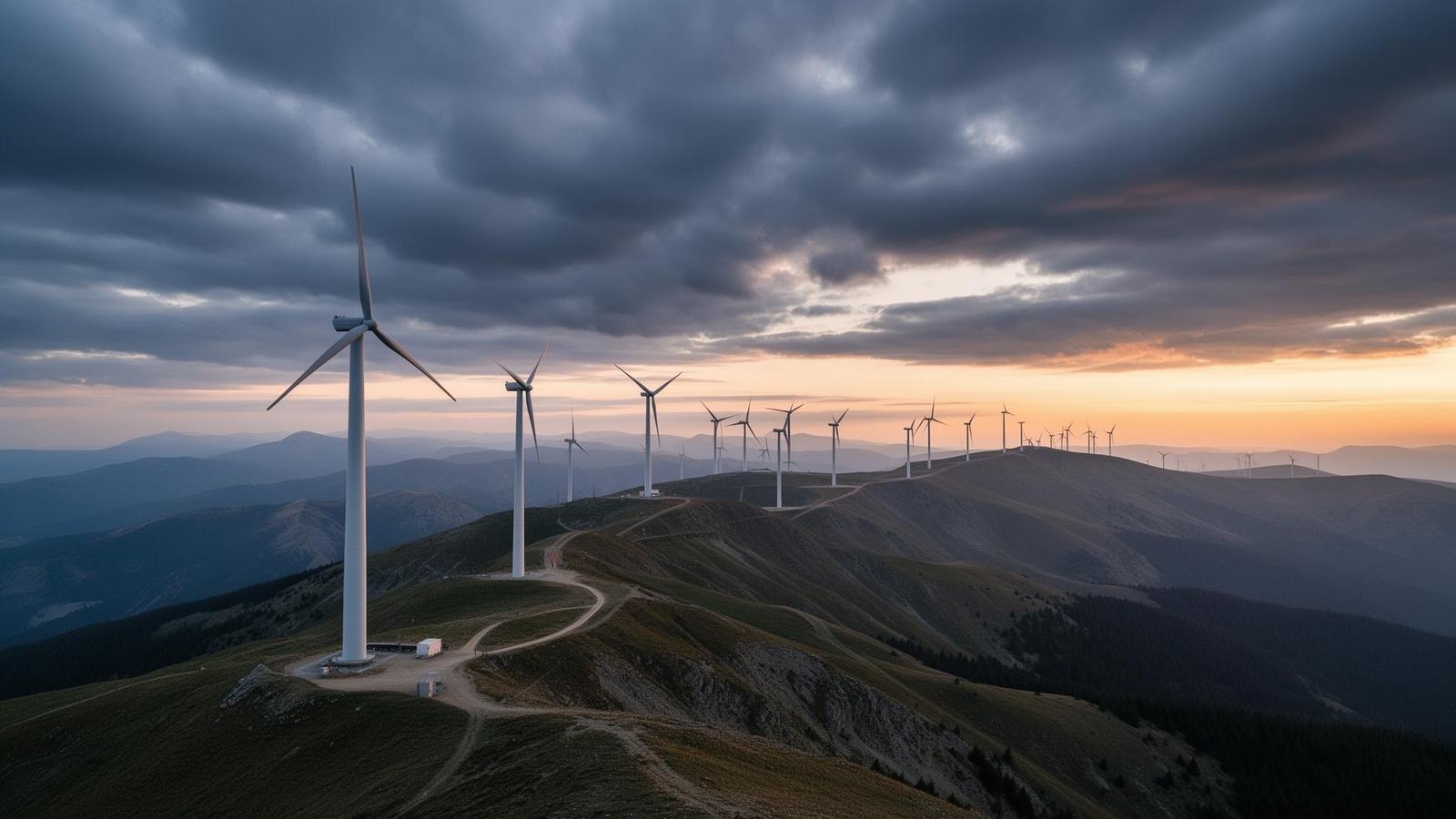
Georgia has only about 40 MW of wind power in operation today, but more than 300 MW is under construction and the government targets roughly 1.3 GW by 2031. This guide sets out which wind power plants exist, which are being built, how projects win support, and what investors should check before committing capital. Figures are as of October 2026.
How much wind power does Georgia have?
At the end of 2025 Georgia had 4,675 MW of installed generating capacity: 3,489 MW hydro, 1,154 MW thermal, 20.7 MW wind and 10.8 MW solar, according to Galt & Taggart data reported by renewables.ge. Wind and solar together produced 84 GWh in 2025, about 0.5% of the country's 13.8 TWh of generation.
That is changing quickly. In 2026 a second wind farm entered operation and the first utility-scale projects reached construction.
Operating wind power plants
| Wind farm | Capacity | Status |
|---|---|---|
| Qartli wind farm (near Gori, Shida Kartli) | 20.7 MW | Operating; Georgia's first wind farm |
| Zemo wind plant | 18.75 MW | Entered operation in 2026 |
Wind farms under construction
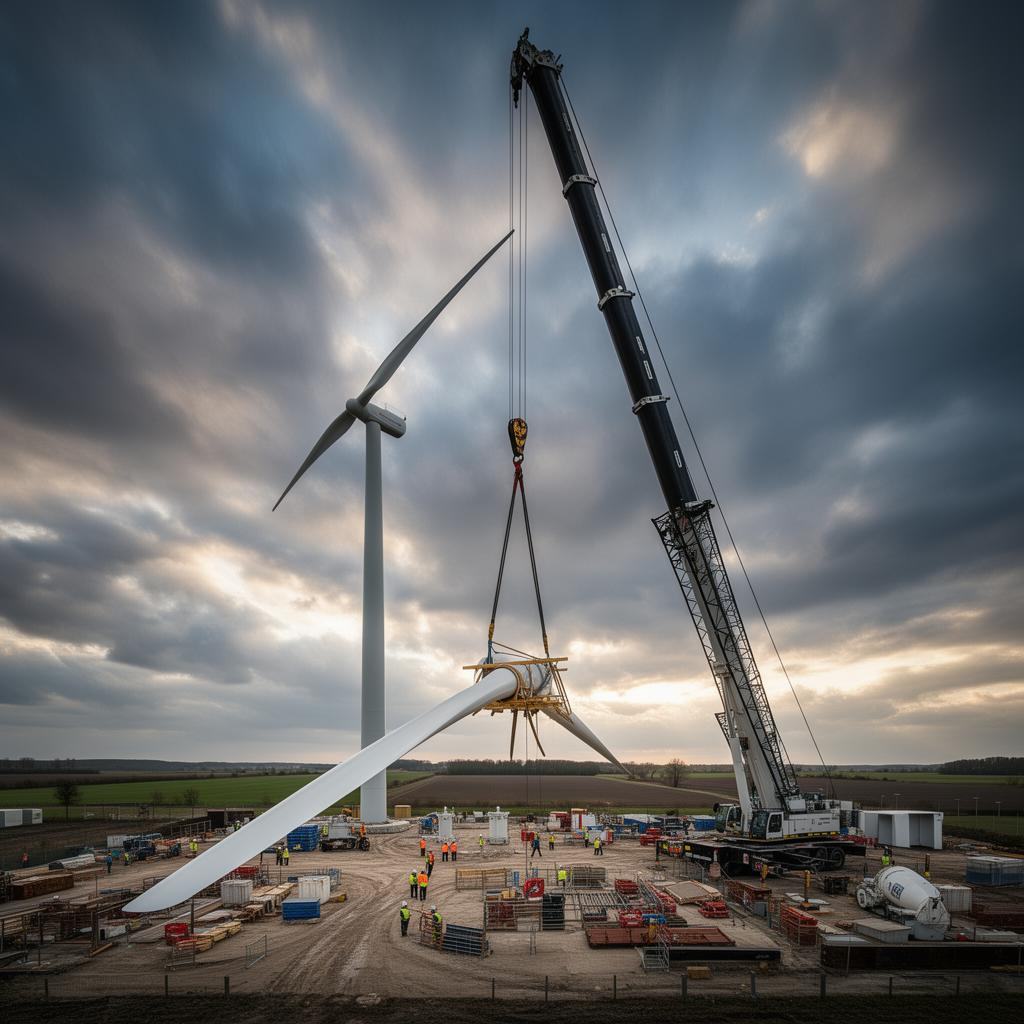
Ruisi wind farm, 206 MW. Developed by Wind Power JSC (part of Peri Group) near Ruisi in Kareli Municipality. It uses 33 Goldwind turbines of 6.25 MW each, with 105 m towers and 171 m rotors. Total investment exceeds USD 240 million, partly financed by a USD 119 million EBRD loan. All turbines were installed by August 2026 and test operation began in late September 2026 (source). Once commercial, it will be Georgia's largest wind plant by far.
Imereti wind project, 104 MW. Thirteen 8 MW turbines in Sachkhere Municipality, western Georgia, with expected output of about 340 GWh a year. The project signed its implementation agreement and power purchase agreement in 2024; construction started in September 2026 and grid connection is targeted for 2027 (source).
The development pipeline
Georgia's wind pipeline counts 34 projects: 5 in construction and 29 in early-stage development (source). Projects with public filings in 2026 include:
Most early-stage projects will not reach financial close. Wind measurement data, grid connection and a bankable offtake are what separate real projects from licences.
How wind projects win support: the capacity auctions
Georgia moved from bilateral memoranda to competitive capacity auctions under its renewable support scheme. For background on the market reform, see our analysis of electricity market liberalisation and CfD auctions.
Winning projects receive a government price guarantee for their output. Oversubscription of more than twice the offered capacity shows strong developer interest, so tariff discipline and project readiness decide who wins.
Why wind matters for Georgia's power system
Hydropower dominates Georgian generation but drops in winter, when the system relies on gas-fired plants and imports. Wind output in Georgia is typically stronger in the colder months, which makes it a natural complement to hydro.
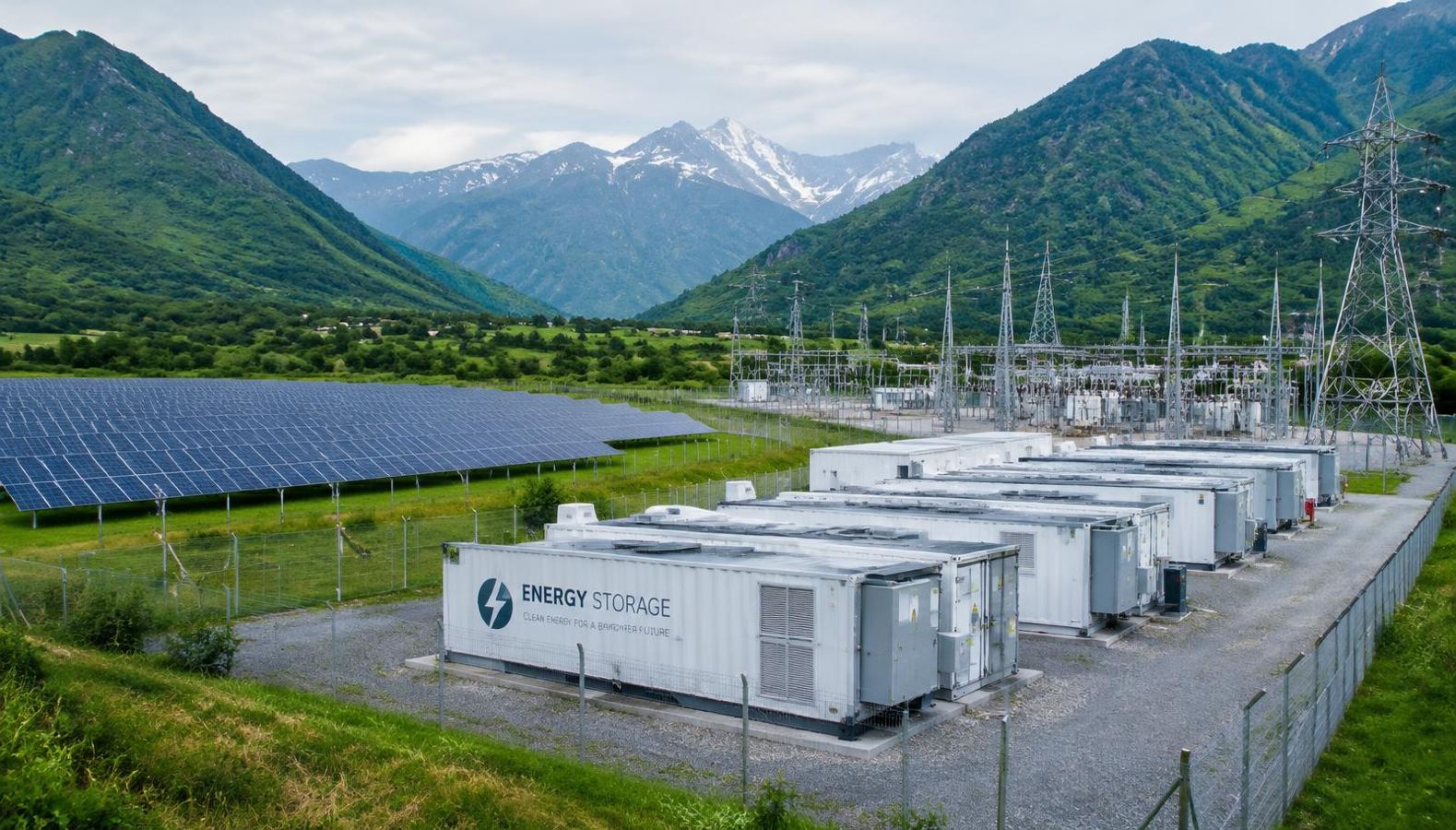
There is a limit, though. The draft National Energy and Climate Plan warns that integrating more than about 750 MW of wind without additional balancing capacity could cause technical problems, partly because wind output often peaks at night when demand is low (source). That is why storage is now part of the auction design; see our guide to battery energy storage in Georgia and to grid infrastructure.
Indicative project economics
TBC Capital modelled a representative 50 MW Georgian wind project in May 2026 with these assumptions and results (source):
| Metric | Modelled value |
|---|---|
| Plant (capacity) factor | 39% |
| Average tariff | 5.7 US cents/kWh |
| Financing | 70% debt, 30% equity, loan tenor up to 15 years |
| Project IRR | 19.5% |
| Equity payback | 5.5 years |
These are modelled figures, not guaranteed returns. Actual returns depend on the measured wind resource, curtailment, balancing costs and the final tariff.
What investors should check before buying or funding a wind project
From our work on energy transactions in Georgia, these are the questions that most often change a valuation:
- Wind data. At least 12 months of on-site measurement (met mast or LiDAR) correlated with long-term reference data, and an independent energy yield assessment with P50 and P90 values.
- Grid connection. A signed connection agreement with GSE, the connection point's capacity, and who pays for substation and line works.
- Curtailment and balancing. How often the system operator may curtail output, and who bears imbalance costs under the support contract.
- Offtake. The auction or PPA terms: tariff, currency, indexation, duration and termination rights.
- Permits and land. Environmental decision, construction permit, land rights for every turbine position and access road, and any forest or protected-area constraints.
- Logistics. Whether 70 m+ blades and heavy nacelles can reach the site on Georgian roads and bridges.
- Turbine supply. Warranty, availability guarantees and service arrangements for the chosen turbine model.
Our technical due diligence service covers these workstreams, and our energy asset due diligence checklist sets out the wider process.
Outlook
With Ruisi and Imereti online, Georgia's wind capacity could rise from about 40 MW to roughly 350 MW by 2027, nearly a tenfold increase. The government's 1.3 GW target for 2031 depends on new balancing capacity, storage and transmission investment keeping pace.
For investors, the window is now: early-stage projects with good wind data and a clear grid path are still available, and competition for them will rise once the first large plants prove their output.
Looking at a wind project in Georgia? Contact our team to discuss origination, due diligence or transaction support.