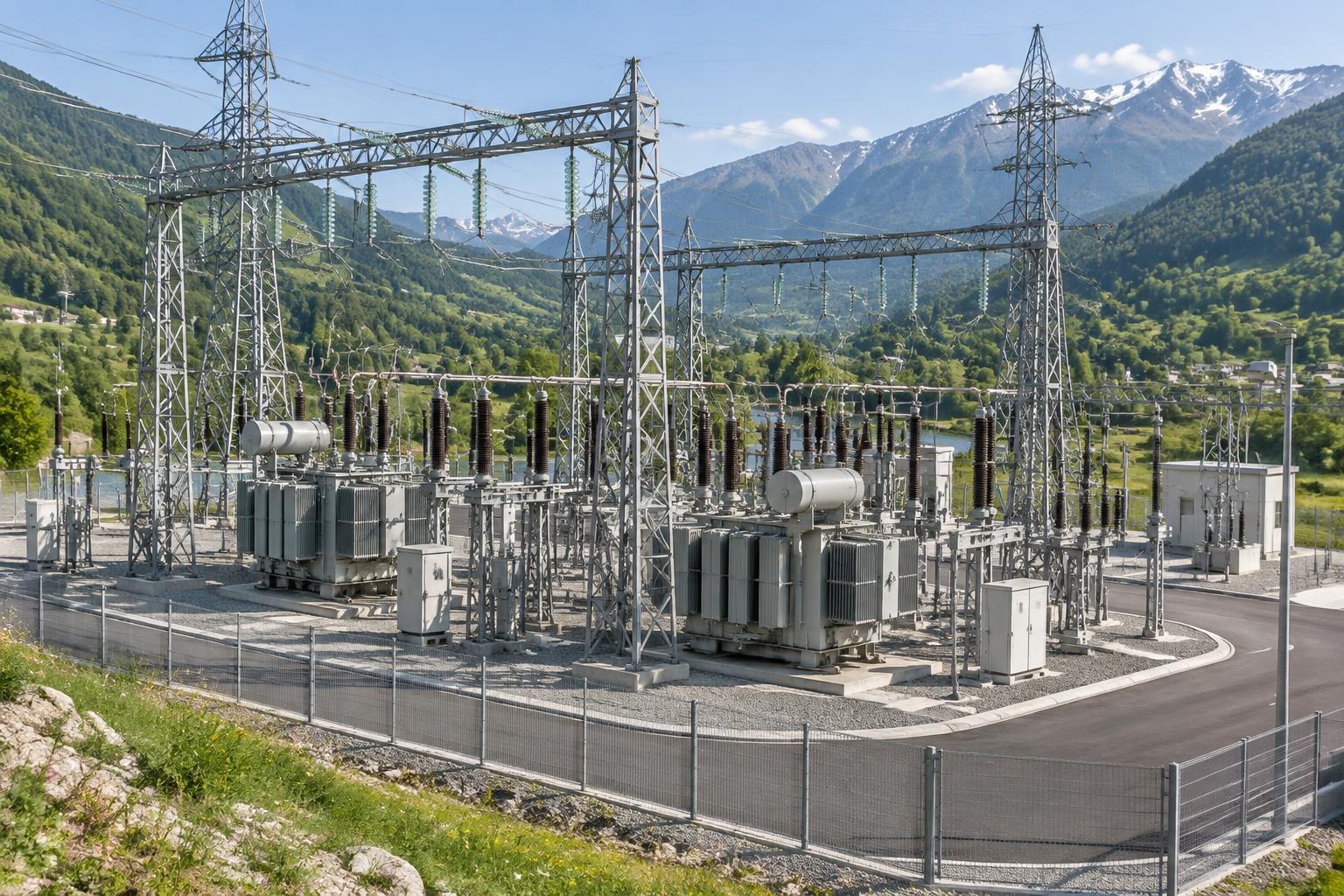
Georgia's power grid has become the main bottleneck for new renewable projects and, at the same time, the focus of the country's largest energy investments, from a battery at Tbilisi to a planned 1,155 km cable under the Black Sea. This guide explains who runs the grid, the main transmission projects under way, how grid limits affect developers and where private investors can take part. Information is as of October 2026.
Who runs Georgia's grid
| Part of the system | Who operates it | Regulation |
|---|---|---|
| High-voltage transmission (500, 400, 220 and 110 kV) | GSE (Georgian State Electrosystem), the state-owned transmission system operator and dispatcher | Transmission tariff set by GNERC |
| Distribution to homes and businesses | Regional distribution companies | Distribution tariffs set by GNERC |
| Cross-border links | GSE, with neighbouring operators in Turkey, Azerbaijan, Armenia and Russia | Market and connection rules under the 2019 energy law (source) |
For how tariffs and licences work, see our guide to GNERC.
Main transmission projects
| Project | What it is | Status and funding |
|---|---|---|
| Energy Network Improvement Programme (ENIP) | Broad upgrade of the transmission network | EUR 270 million, co-financed by KfW and the EBRD, with a EUR 9.9 million EU grant (source) |
| Battery storage at Ksani substation | 200 MW / 200 MWh battery on the transmission grid near Tbilisi, to reduce reliance on neighbours for grid stability | Financed by a USD 104 million ADB loan; still in procurement in mid-2026 (source) |
| Idliani 500/110/35/10 kV substation | Connects about 230 MW of hydropower under construction in Svaneti | Under construction (source) |
| Akhaltsikhe–Batumi 220 kV line | Double-circuit line from the Akhaltsikhe substation, home of the back-to-back HVDC converter for exchange with Turkey, to Batumi; connects Shuakhevi (185 MW with Skhalta) and Koromkheti (150 MW) HPPs | Ongoing (source) |
| Black Sea Submarine Cable | HVDC link from Anaklia (Georgia) to Romania | Preparation phase; see below |
The Black Sea Submarine Cable
The cable would connect the Georgian and EU power systems for the first time. According to Romania's grid operator Transelectrica, the recommended design from CESI's 2024 feasibility study is a 1,300 MW, ±525 kV HVDC link about 1,155 km long, of which about 1,115 km is under the sea, between Anaklia and Topraisar, with sections deeper than 2,500 metres (source).
- Partners: Georgia, Romania, Azerbaijan and Hungary signed a strategic partnership on green energy in December 2022 (source).
- Funding so far: a World Bank loan of USD 35 million (2024) for preparation, under a programme that could reach USD 500 million; Georgia's 2026 budget includes GEL 25 million for survey work (source).
- Status: Transelectrica and GSE signed a memorandum in early 2026, and work now focuses on the seabed survey and an updated feasibility study. The memorandum is not a final investment decision (source).
- Cost: estimated at about EUR 2.3 billion (source).
For more, see our article on the Black Sea submarine cable.
What grid limits mean for developers
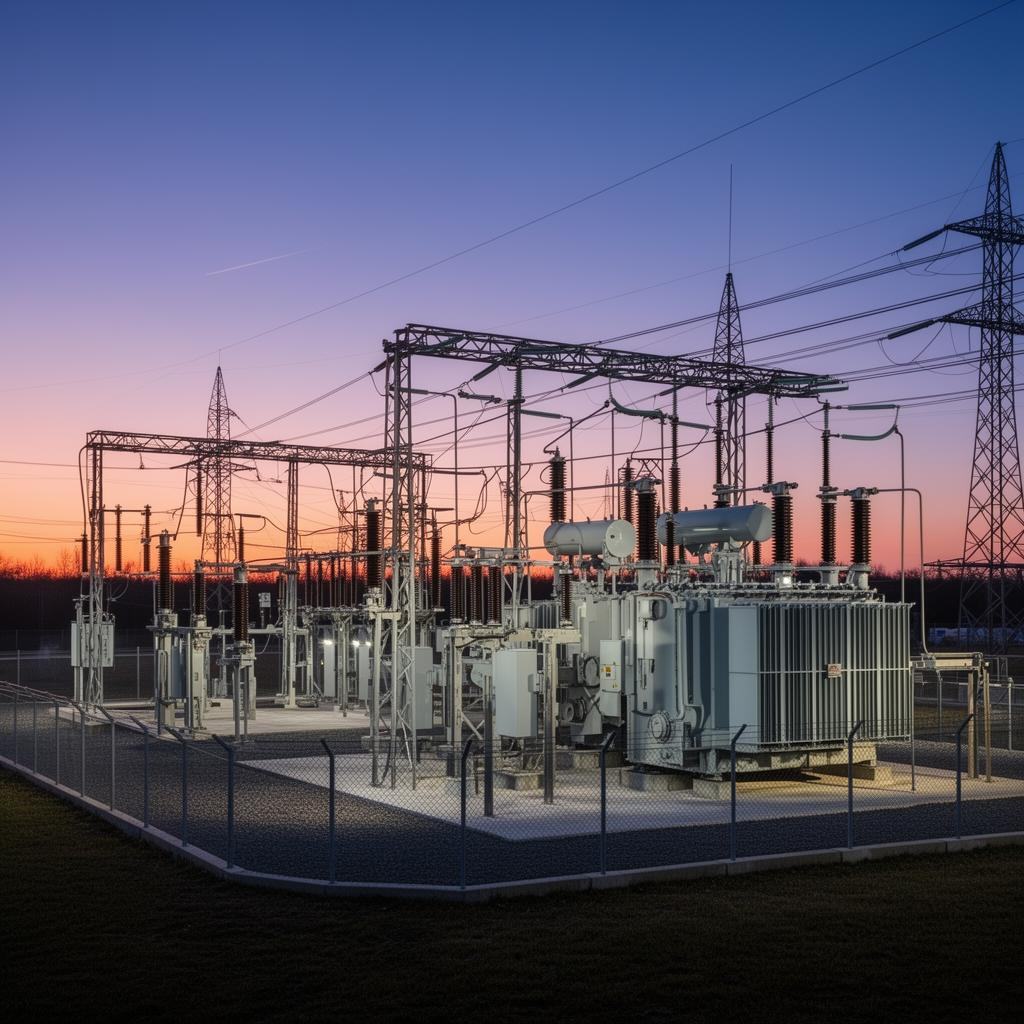
- Variable renewables are capped. GSE has set limits on new capacity the grid can absorb: 0.75 GW for wind and 0.5 GW for solar, according to Galt & Taggart's June 2025 review (source).
- The pipeline is growing fast. GSE's ten-year network plan lists 31 solar plants for possible commissioning in 2026, with about 346 GWh of forecast annual output, 23 of them in Kakheti (source). See our solar farm development guide for how developers secure a connection.
- Location matters. Projects in eastern Georgia compete for the same substations, while western hydro competes for lines in the spring flood.
Practical steps:
- Ask for a connection offer early and treat it as a core project document.
- Check who pays for the line and substation bay, and the schedule of any network reinforcement you rely on.
- Test curtailment: model output in hours when the grid is congested.
- Consider storage. Wind and solar projects with storage had their own quotas in the second capacity auction; see our guide to battery storage in Georgia.
Where private investors fit
The transmission grid is state-owned and financed mainly by GSE with development banks. Private capital takes part in other ways:
- Generation with its own connection assets: developers usually build the line and substation bay that connect their plant.
- Storage and flexibility: batteries and regulating hydropower, which the state is actively supporting.
- Engineering, construction and equipment: contracts under the programmes above.
- Co-investment alongside development banks in projects tied to grid expansion and exports.
Risks to watch
- Connection delays when reinforcements slip.
- Regulatory change in connection rules, tariffs and balancing.
- Construction in mountain terrain, with short building seasons at altitude.
- Cross-border dependence: exports depend on neighbours' grids and on political relations.
Our technical due diligence team reviews connection agreements, curtailment risk and network plans for investors. See also our guides to the electricity market and CfD auctions and power plant permits.
Planning a project that depends on grid capacity? Contact us.