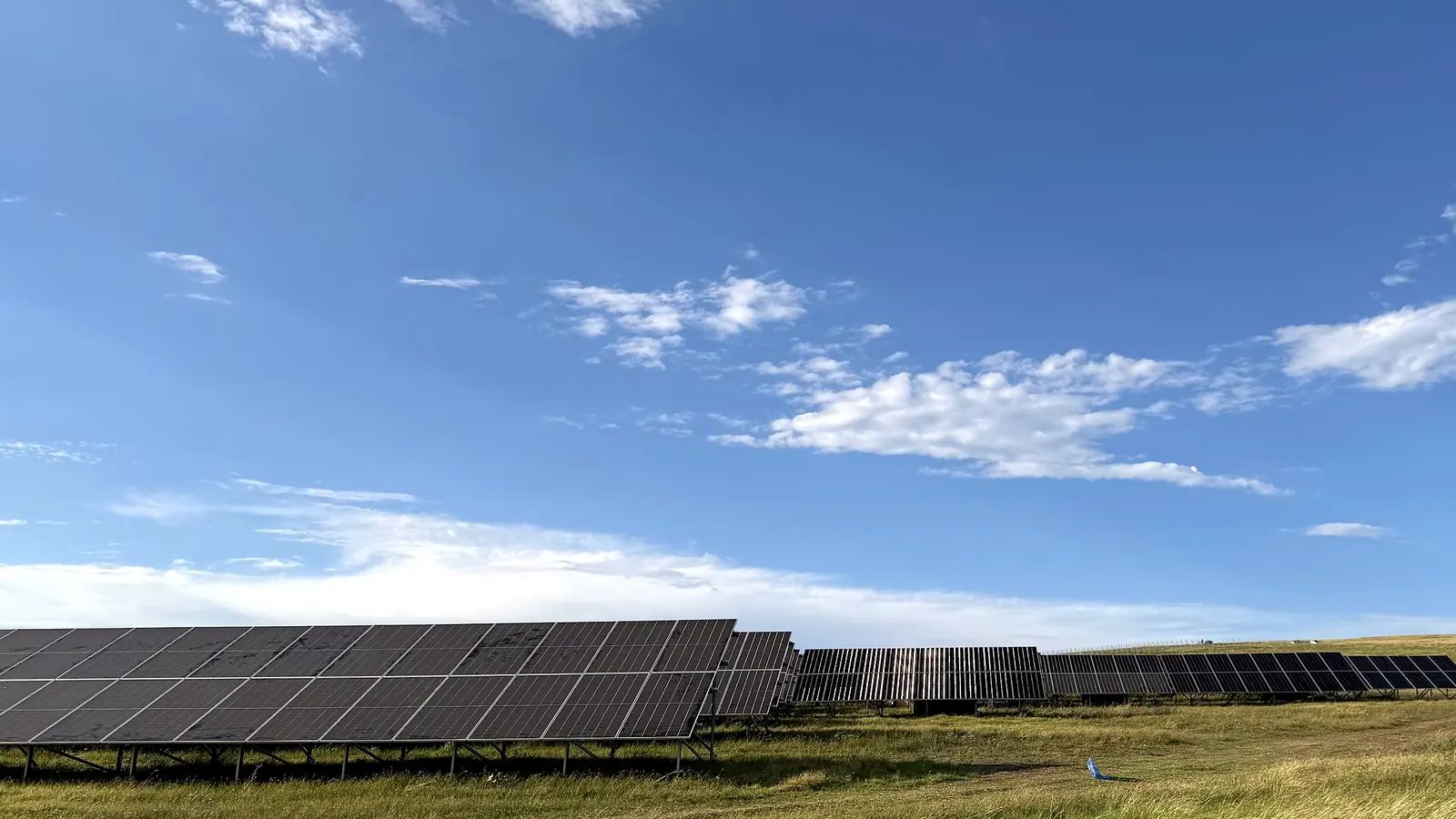
How much do solar panels cost in Georgia? In 2026 a complete rooftop system costs about $650–750 per kW for a home and $400–600 per kW for a business, installed. Large ground-mounted plants are cheaper per kW for equipment, but land and grid connection add a lot. This guide gives real prices, including the numbers from our own 2.5 MW plant in Tbilisi, and shows how to calculate the system size and payback for your bill.
Solar panel prices in Georgia: quick answer
Installed prices fall as systems get bigger. The first five rows are the average turnkey prices published by the Georgian installer Step Energy (source); the last row is the EPC price for our own plant, Mukhiani One.
| System size | Typical use | Price per kW, installed | Approximate total |
|---|---|---|---|
| 1 kW | Small flat or country house | about $750 | about $750 |
| 3 kW | Average house | about $700 | about $2,100 |
| 5 kW | Large house or small shop | about $650 | about $3,250 |
| 10 kW | Small business | about $600 | about $6,000 |
| 50 kW | Medium business | about $500 | about $25,000 |
| 100 kW | Large business | about $400 | about $40,000 |
| 500 kW | Industrial site or small power plant | about $350 | about $175,000 |
| 3.1 MWp (2.5 MW AC) | Mukhiani One, ground-mounted | about $300 per kWp (EPC only) | about $940,000 |
Check whether a quote includes VAT (18%). The installer prices above are averages; the final price depends on the roof, the brands and how far the site is from Tbilisi.
What is included in the price
A turnkey quote usually covers:
- Solar modules. Modern panels are 550–620 W each, so 1 kW needs about two panels.
- Inverter. On-grid inverters are the cheapest; hybrid inverters, which work with batteries, cost more.
- Mounting structure, cables and protection. Roof or ground structures, DC and AC cabling, breakers and metering.
- Design, installation and commissioning.
Not included, and often forgotten:
- Batteries. They add a lot to the price and only pay back if you need evening power or backup.
- Grid connection. For small rooftop systems this is usually a modest fee. For a power plant it is a major cost: at Mukhiani One, the connection to the distribution grid cost about $66,000 per 500 kW plant.
- Land. Ground-mounted plants need about 1 hectare per MW. Near Tbilisi, land made up 36% of our budget.
What a solar power plant really costs
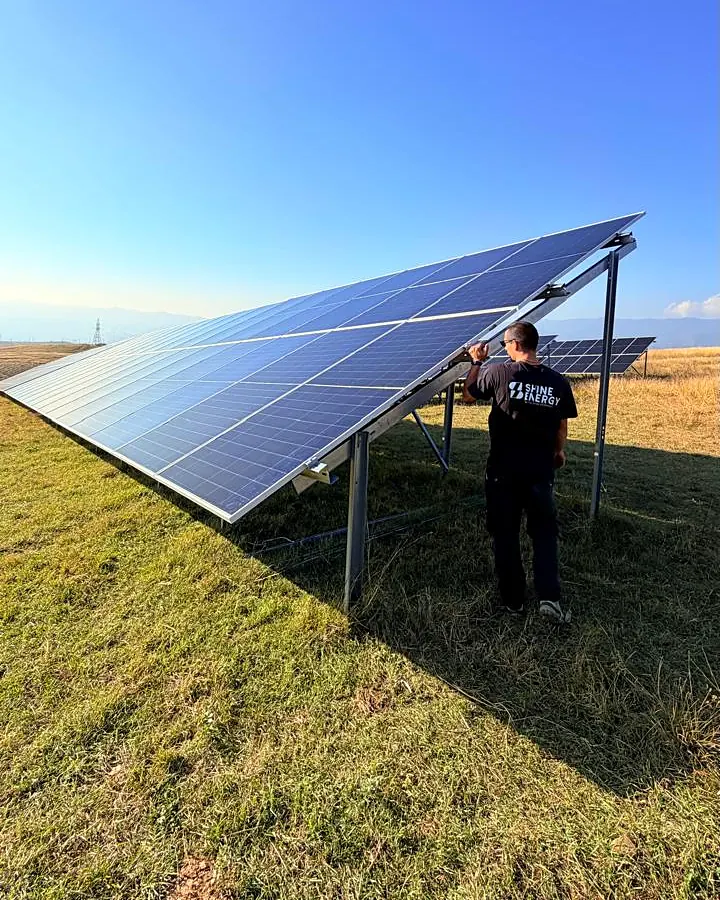
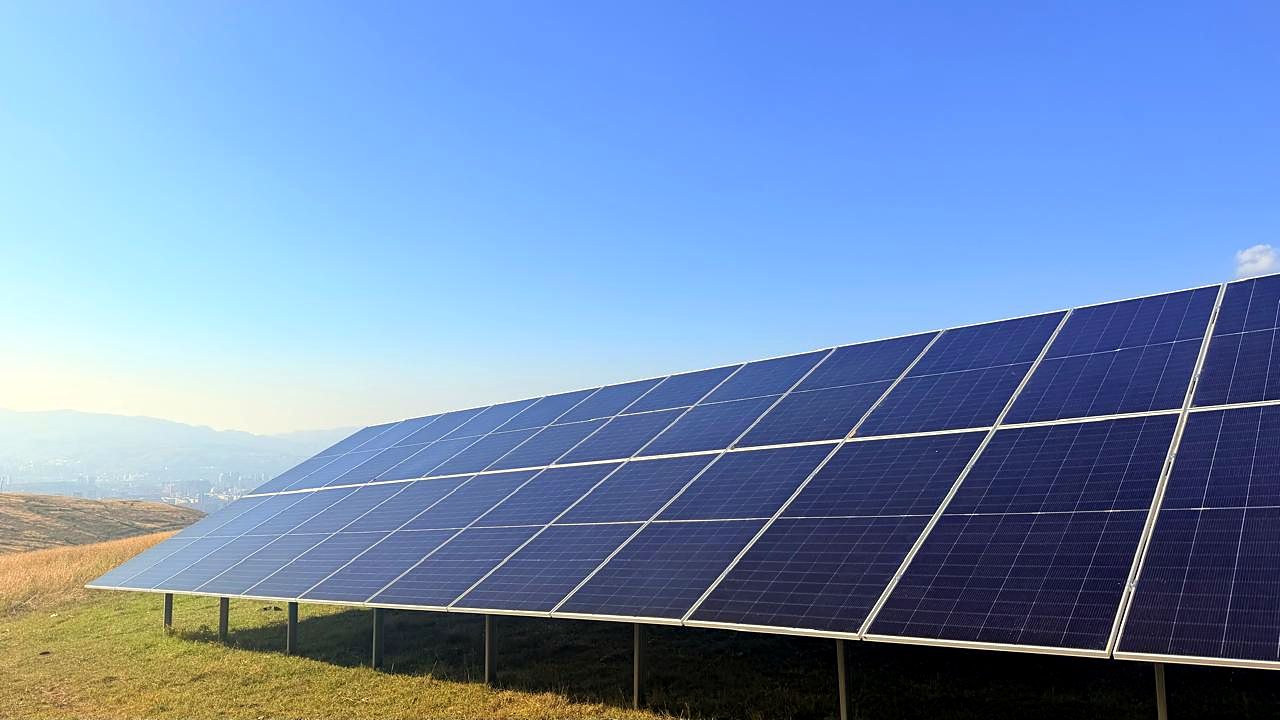
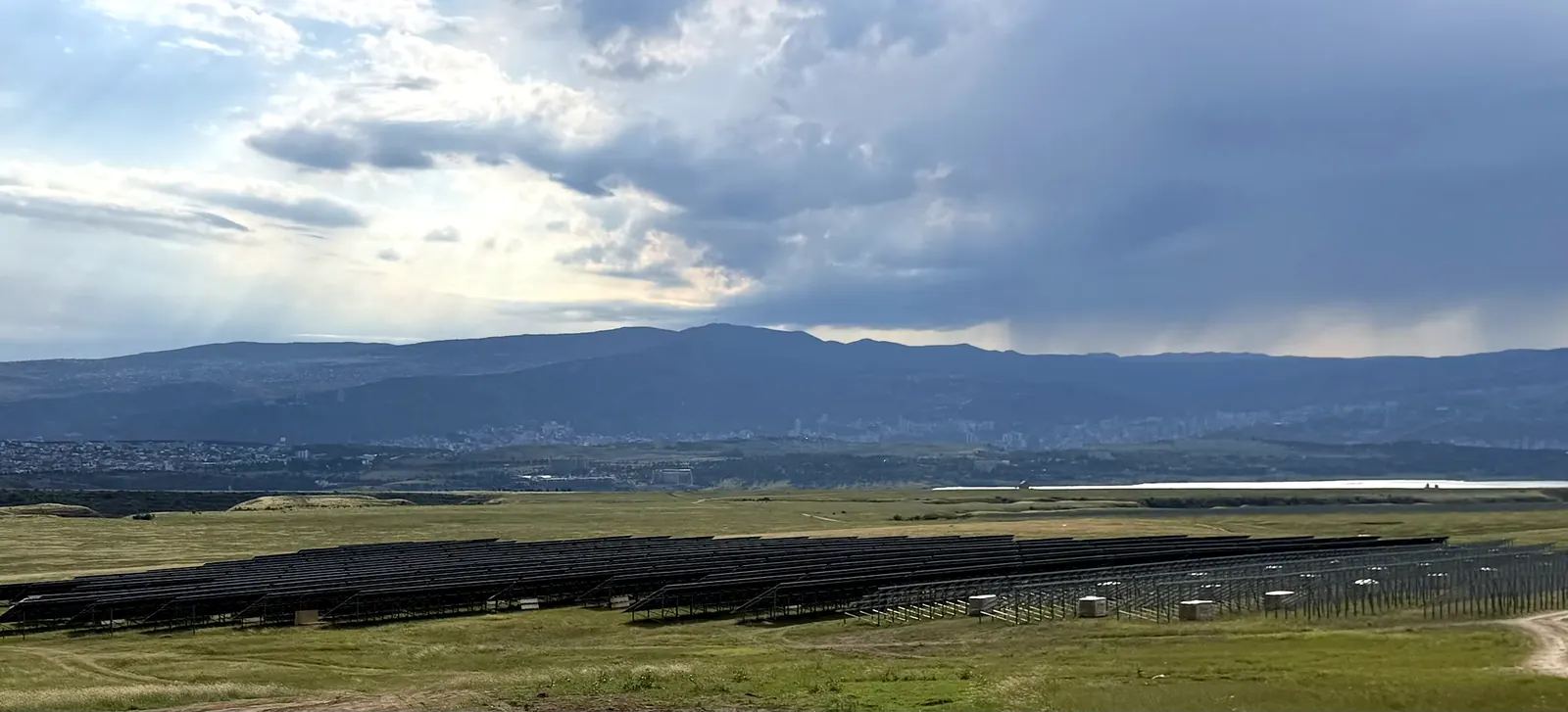
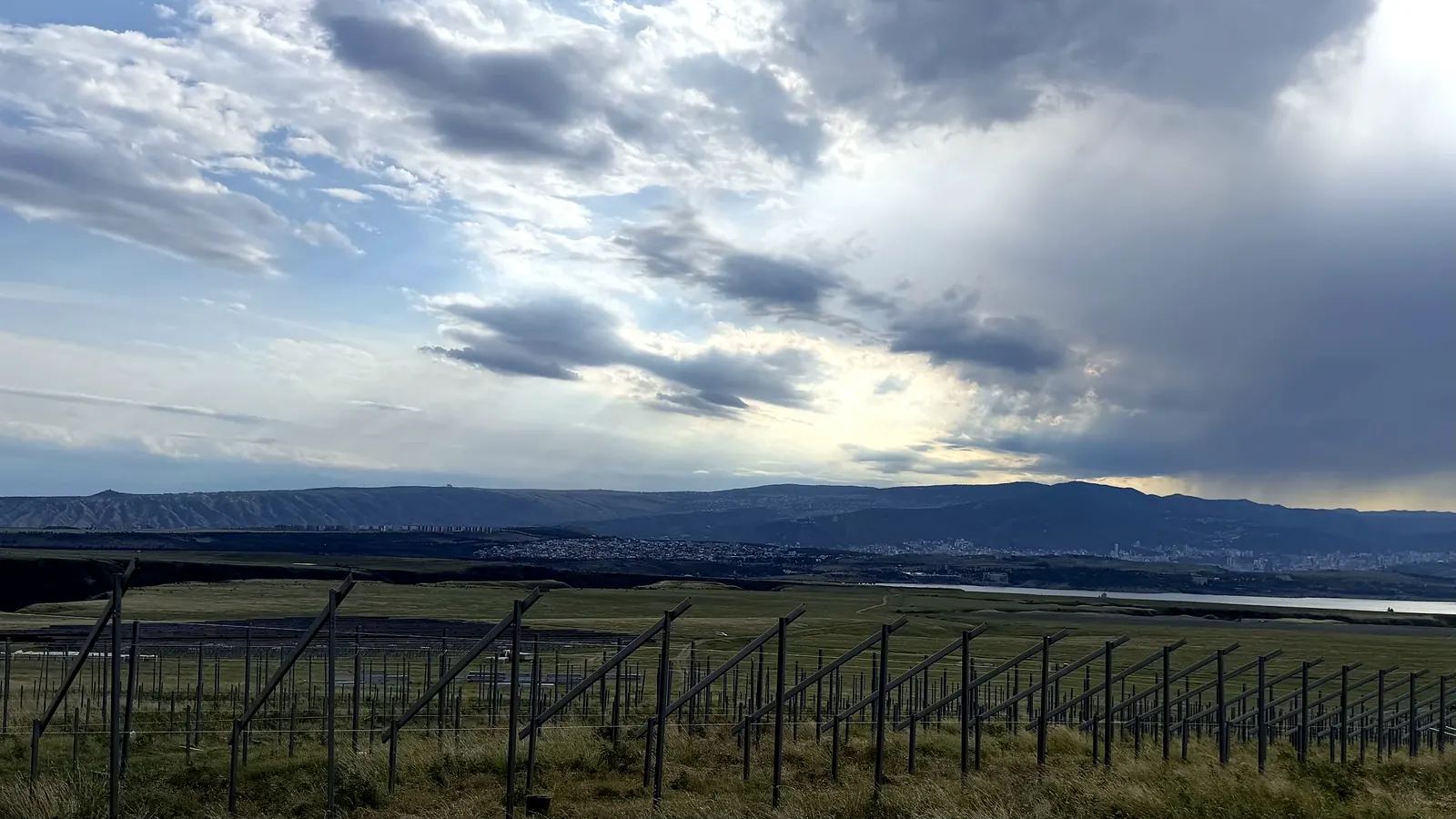
For a power plant, panels are only part of the bill. These are the real numbers from Mukhiani One, five 500 kW plants in Tbilisi completed in September 2026 (excluding VAT):
| Cost item | Amount | Share |
|---|---|---|
| EPC (modules, inverters, structures, installation) | about $940,000 | 47% |
| Land, about 3 hectares | about $705,000 | 36% |
| Grid connection | about $332,000 | 17% |
| Total | about $1.97 million (≈ $630 per kWp all-in) | 100% |
Further from Tbilisi, land is cheaper but the grid connection can cost more. Read the full Mukhiani One case study for yield and returns.
Solar panel calculator: how to size your system
You can estimate the size you need with three numbers: your monthly bill, your tariff and your site's yield.
- Find your monthly consumption. Divide your monthly bill by your tariff. A small business in Tbilisi pays about 35 tetri per kWh; a household pays about 20–29 tetri depending on consumption (GNERC tariffs).
- Turn it into a yearly figure. Multiply by 12.
- Divide by the yield. In Georgia, 1 kW of panels produces about 1,100–1,400 kWh a year by the EU's PVGIS model: about 1,300 in Tbilisi and the east, less on the Black Sea coast (yield by city). Well-built plants can do better; our Tbilisi plant is modelled at about 1,415. You can check your exact address in the EU's free PVGIS tool.
Example: a business paying 1,000 GEL a month in Tbilisi
- 1,000 GEL ÷ 0.35 GEL per kWh ≈ 2,840 kWh a month, or about 34,000 kWh a year
- 34,000 kWh ÷ 1,300 kWh per kW ≈ 26 kW of panels
- Cost: 26 kW × about $560 ≈ $14,500, or about 39,000 GEL
- Saving: if 80% of the power is used on site, about 10,000 GEL a year, so the system pays back in roughly 4 years
Example: a house using 300 kWh a month
- A 3 kW system costs about $2,100 (about 5,700 GEL) and produces about 3,900 kWh a year
- Households use less power during the day, so more is exported at a low price. Payback is usually 7–9 years
These are illustrations, not quotes. Two rules make the biggest difference: size the system to your daytime use, and remember that electricity you export earns far less than electricity you use yourself. Under net billing, exported power is paid at about 6–10 tetri per kWh (source), compared with about 35 tetri a business pays for grid power.
How much space do you need?
- Roof: about 5–7 m² per kW, depending on the panels and roof shape.
- Ground: about 1 hectare per MW including row spacing. Mukhiani One uses about 6,000 m² for each 500 kW plant.
Financing solar panels in Georgia
- Bank energy loans. TBC Bank and Bank of Georgia offer loans for solar systems for homes and businesses; TBC Bank financed most of Mukhiani One.
- Produce in Georgia (Enterprise Georgia). Solar, wind and hydro plants up to 0.5 MW can get state support on loans or leasing, including interest co-financing (source).
- EBRD credit lines. Local-currency loans for small and medium businesses, with technical support.
Should you install solar panels?
For businesses in Georgia the answer is usually yes: high daytime use and a tariff of about 35 tetri make paybacks of 3–5 years common. For homes it depends on how much power you use during the day. For investors, plants of 500 kW and above are a different business, where land, grid and offtake decide the returns. See our solar power plant services or get in touch to discuss a project.