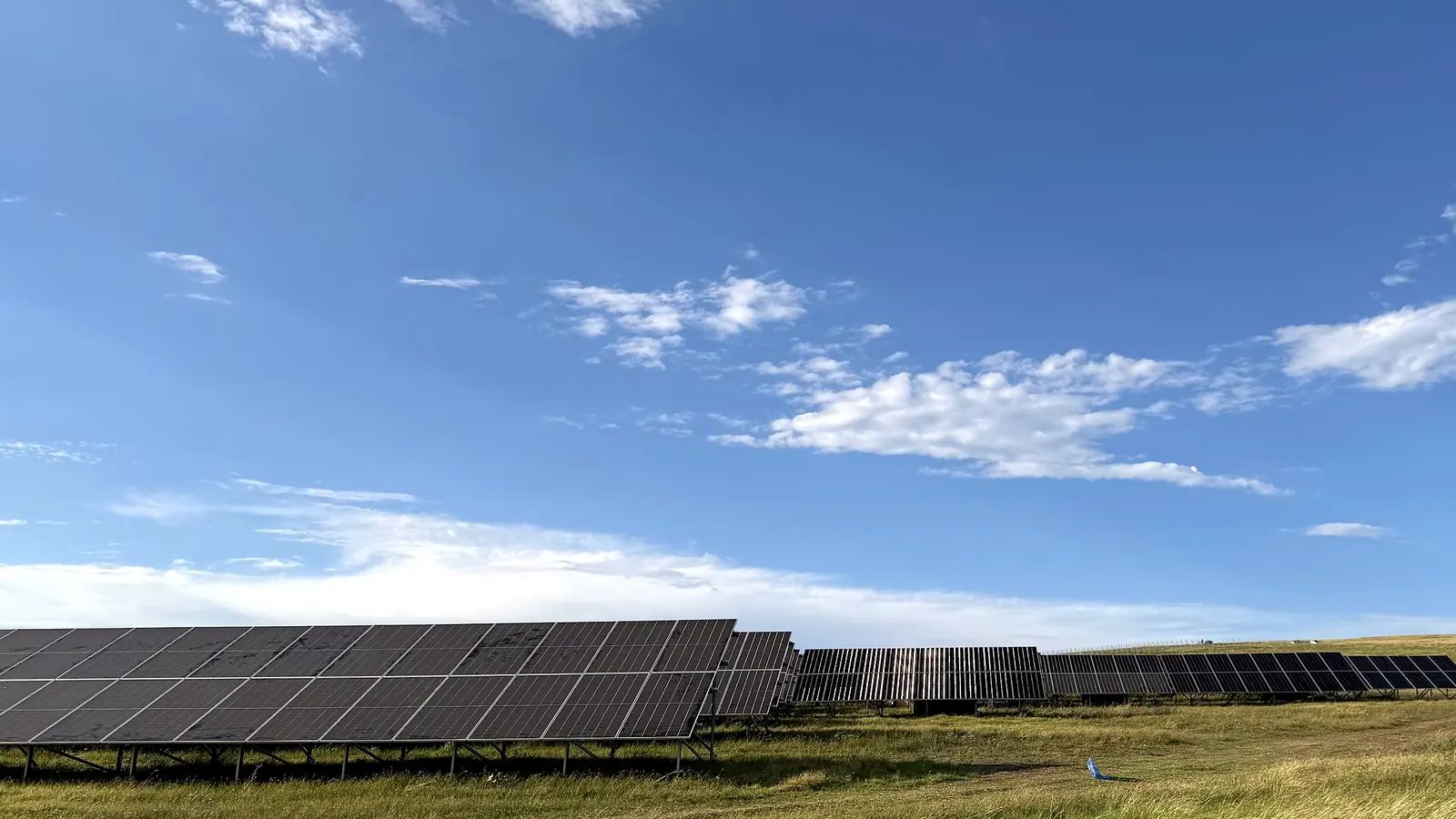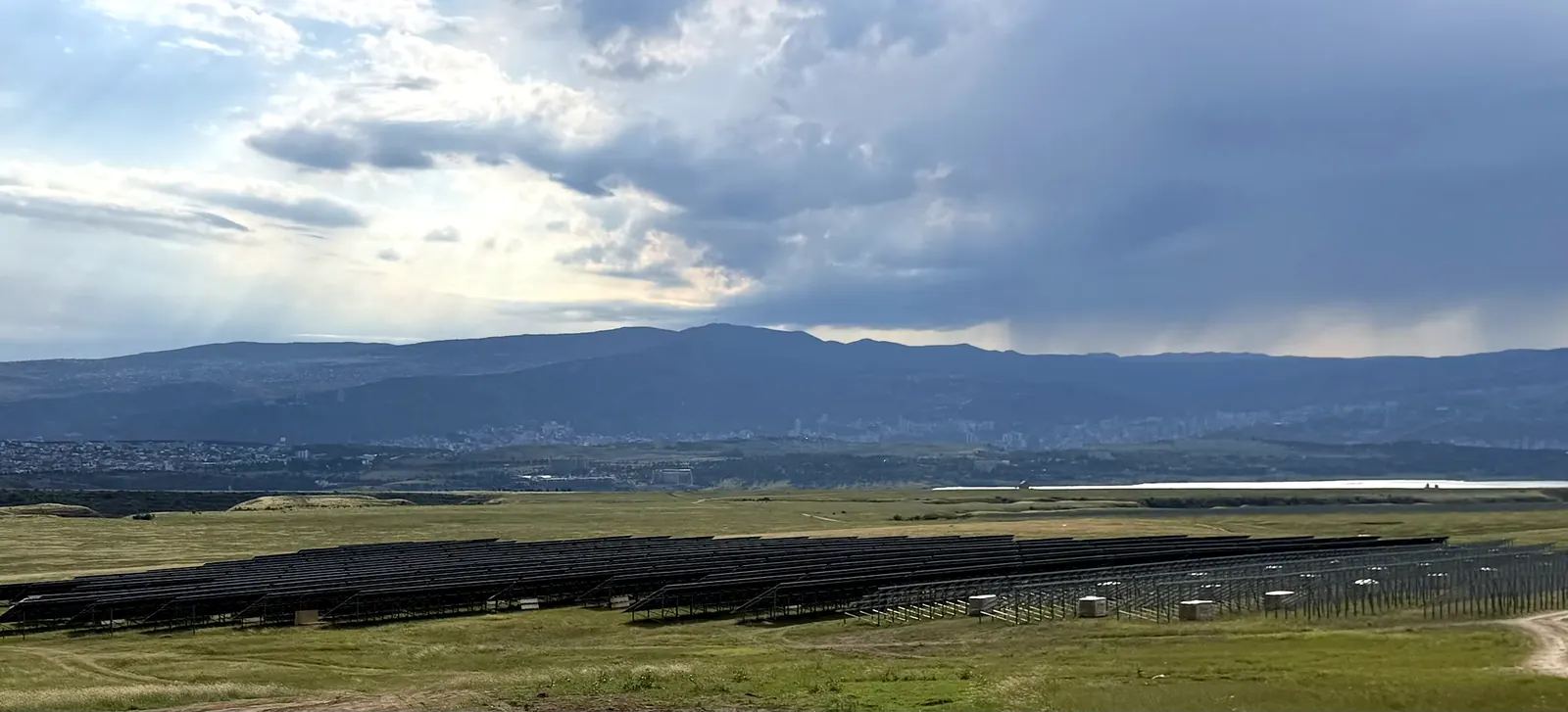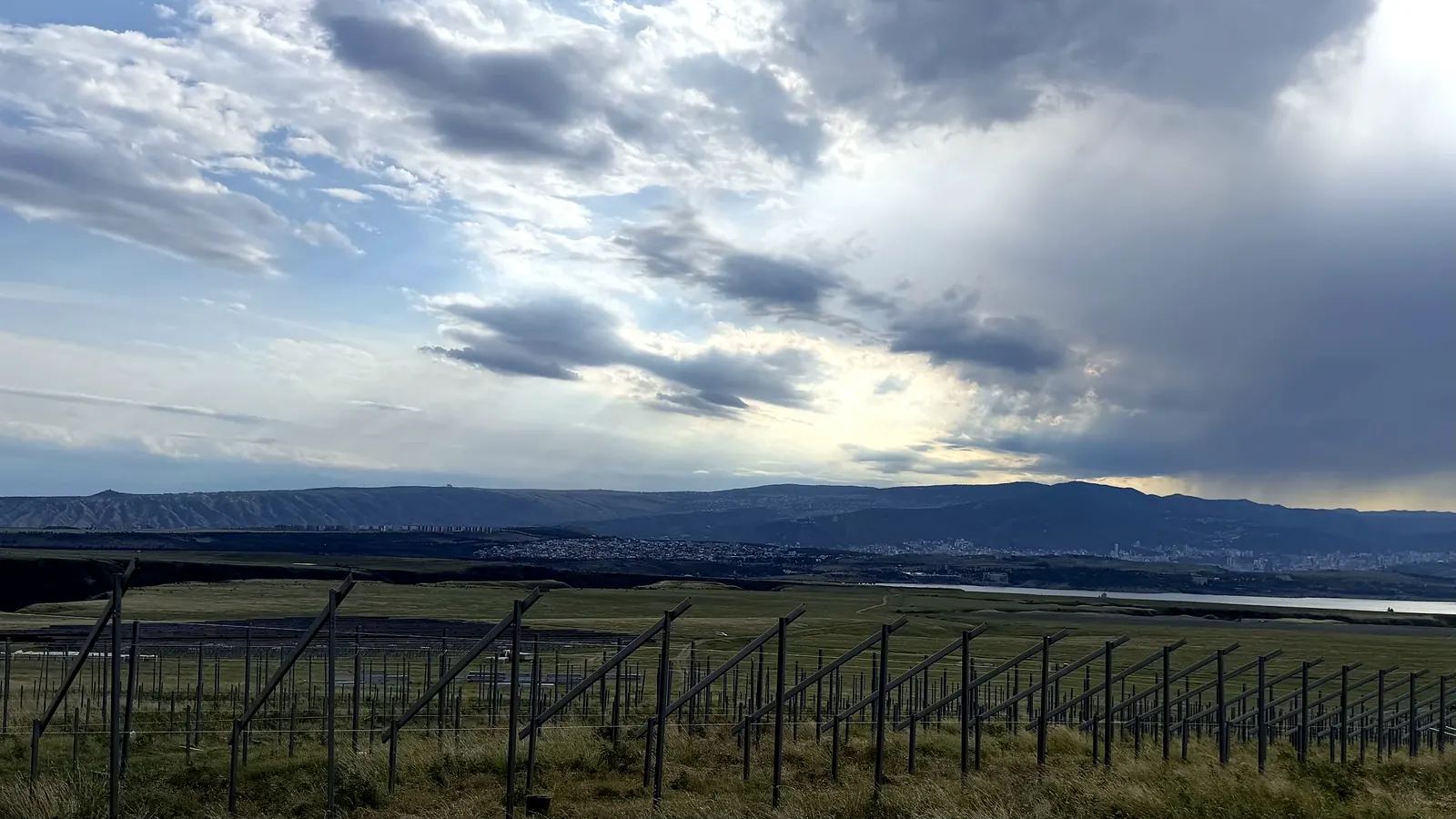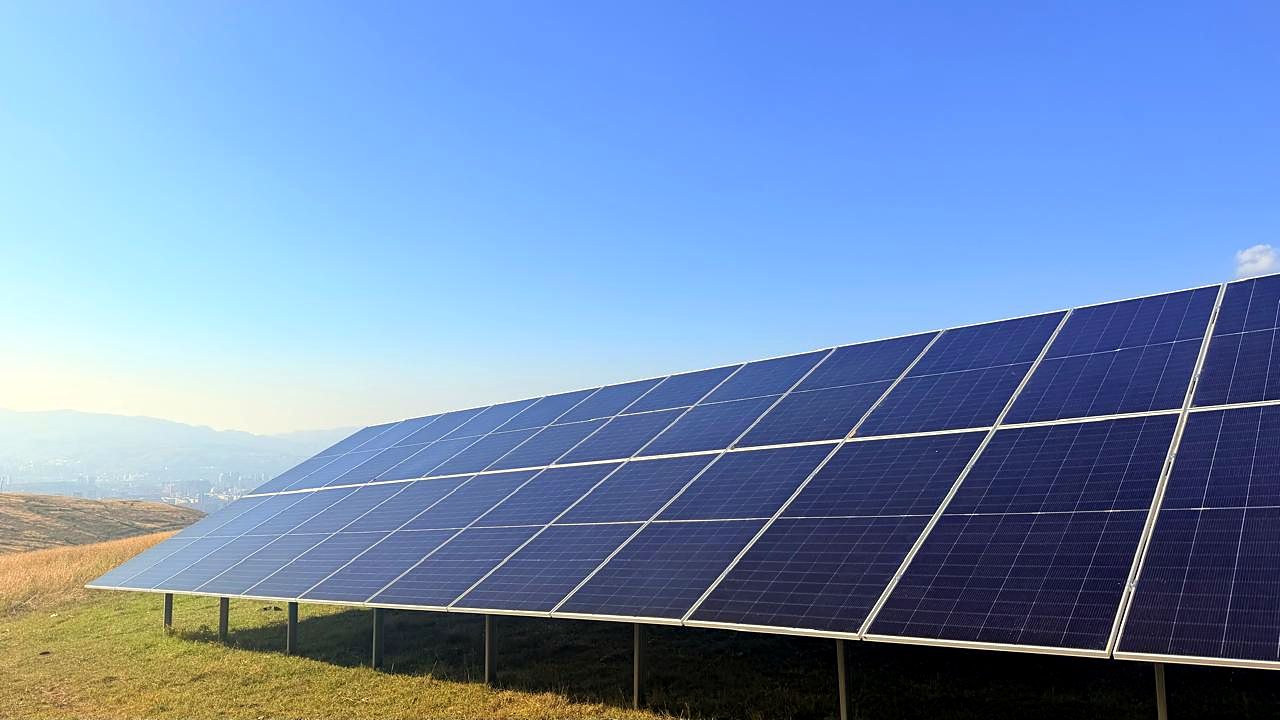
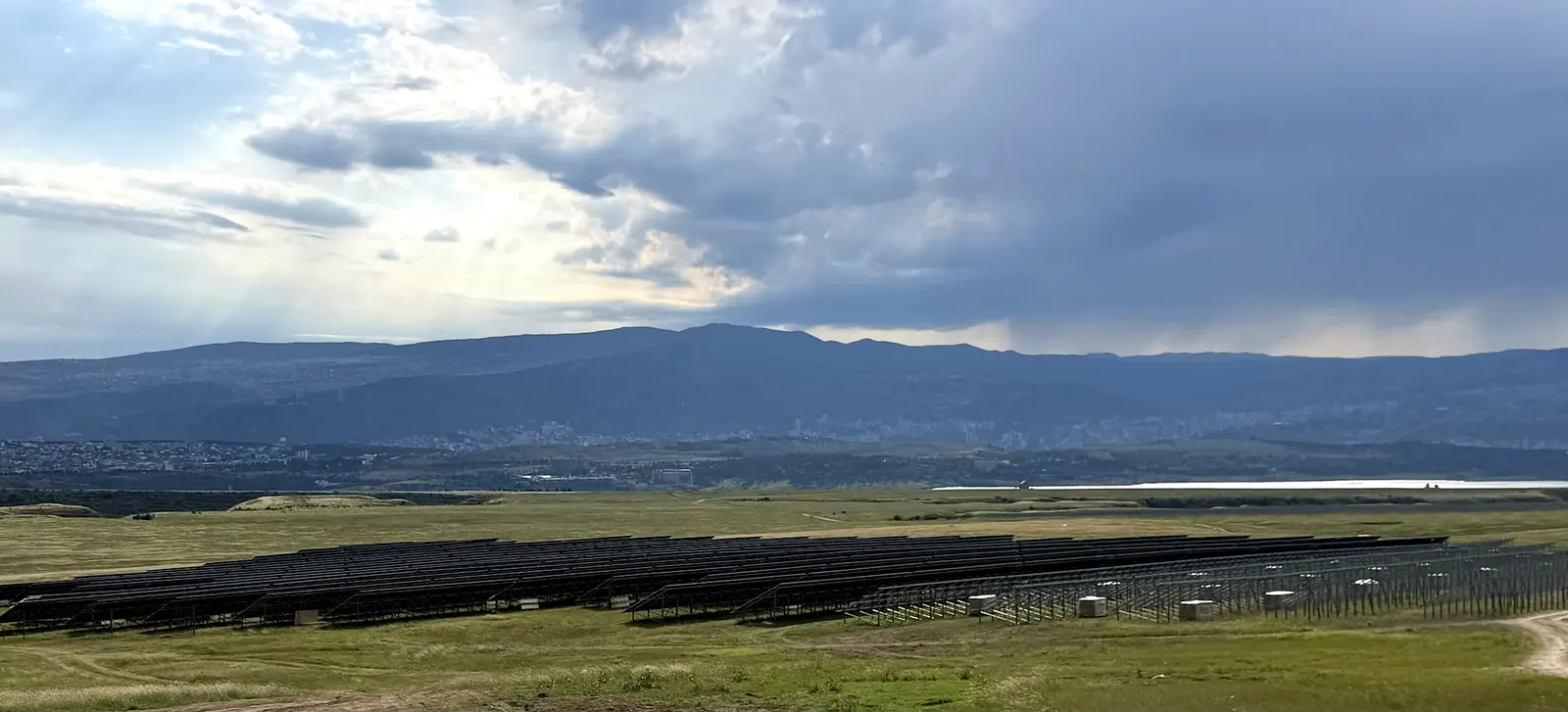
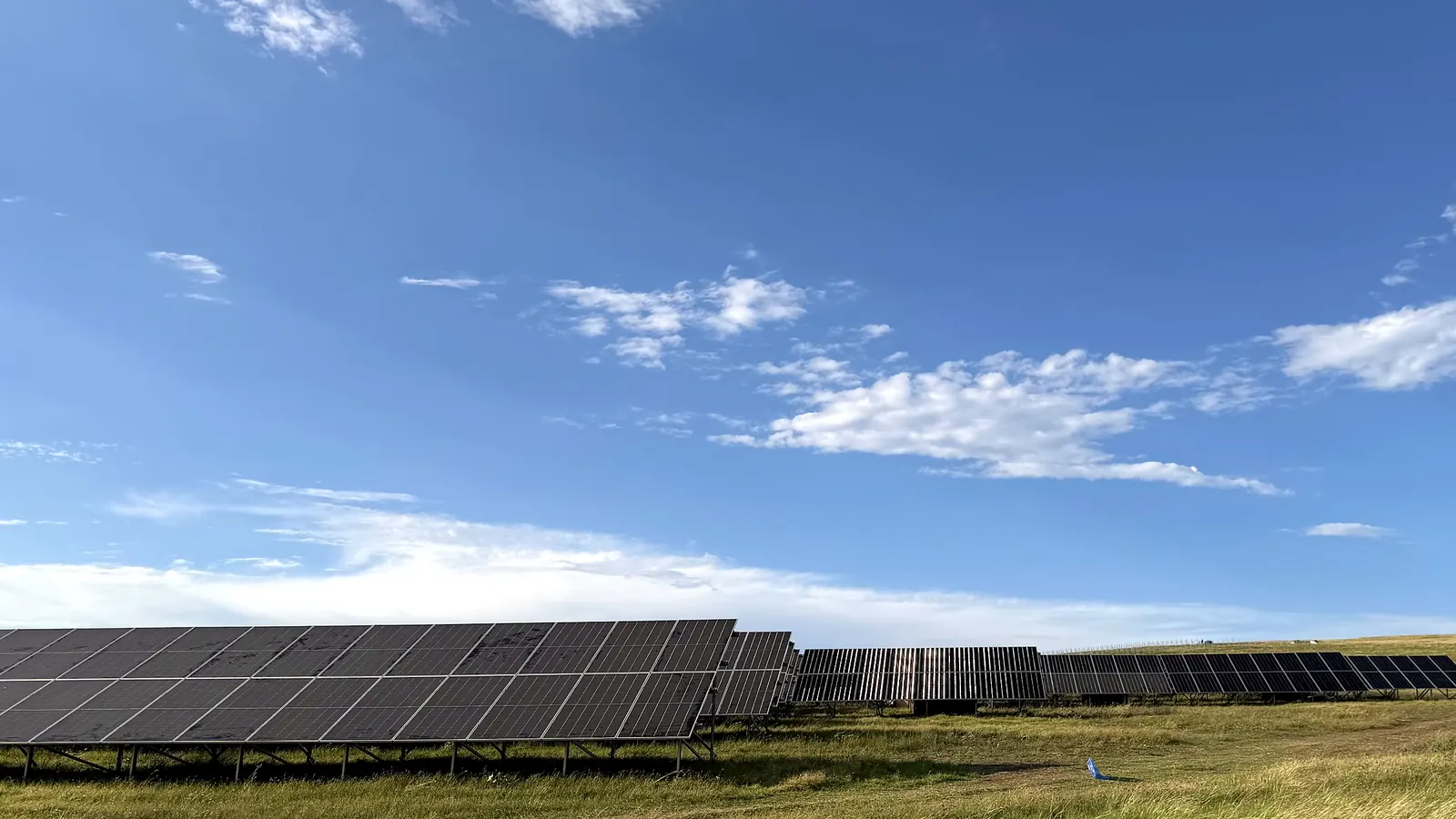
Mukhiani One is a 2.5 MW solar power plant in Tbilisi, owned and developed by Caucasus Energy Partners. It is made up of five 500 kW plants on the hills above the Tbilisi Sea in Mukhiani, built by the Georgian EPC contractor Shine Energy and financed by TBC Bank. Construction was completed on 30 September 2026. This case study shares the real numbers behind the project, so investors can see what a Georgian solar plant costs and earns.
Mukhiani One at a glance
| Item | Mukhiani One |
|---|---|
| Location | Mukhiani, Tbilisi, above the Tbilisi Sea |
| Capacity | 2.5 MW AC (5 × 500 kW), about 3.1 MWp of modules |
| Land | About 3 hectares, roughly 6,000 m² per 500 kW plant |
| Owner and developer | Caucasus Energy Partners |
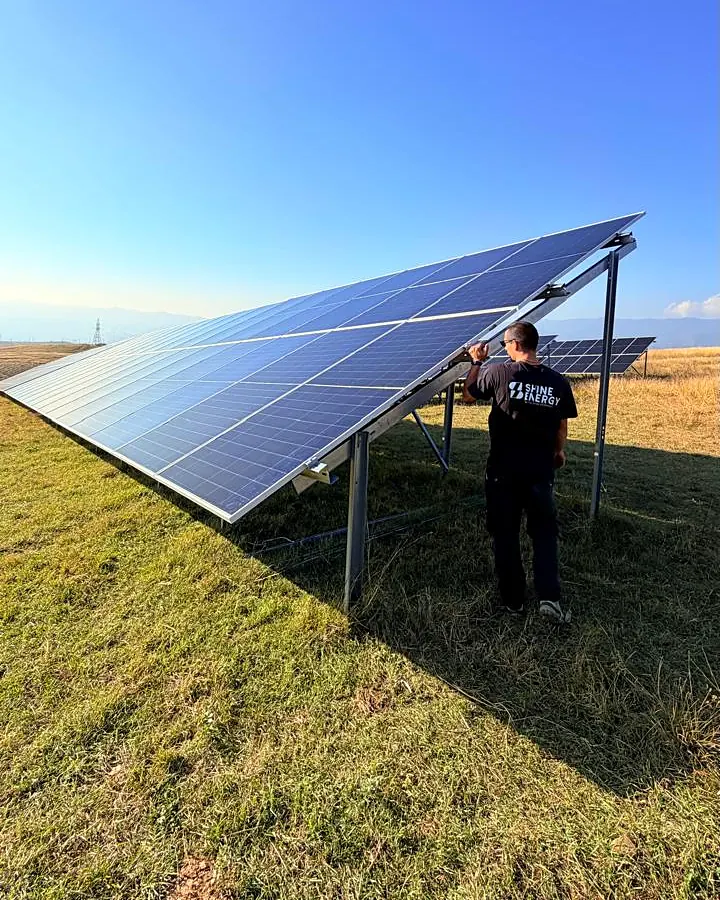
| EPC contractor | Shine Energy |
| Financing | 10-year loan from TBC Bank, mostly debt-financed |
| Offtake | Electricity sold to private companies under Georgia's net-metering rules |
| Expected output | About 4.3 GWh in the first year |
| Status | Built (30 September 2026), waiting for grid connection by Telasi |
Why five plants of 500 kW
Georgia lets small generators of up to 500 kW connect under net-metering rules, known locally as "Neto". Instead of one 2.5 MW plant, we built five 500 kW plants. Each one sells its electricity to private companies, which pay less than their normal grid tariff. A business in Tbilisi pays about 35 tetri per kWh for grid power (see our GNERC tariff guide); our base case assumes buyers get about 10% off that price.
This structure needs no GNERC generation licence and no auction. The trade-off is that the business model depends on the net-metering rules and on the distribution company. For how this compares with the auction route for larger plants, see our guide to solar energy in Georgia.
What it cost
All figures are in US dollars and exclude VAT.
| Cost item | Amount | Share |
|---|---|---|
| EPC (modules, inverters, structures, installation) | about $940,000 (≈ $300 per kWp) | 47% |
| Land, about 3 hectares | about $705,000 | 36% |
| Grid connection, paid to the distribution company | about $332,000 (≈ $66,000 per 500 kW plant) | 17% |
| Total | about $1.97 million | 100% |
That works out to about $790,000 per MW of AC capacity, or about $630 per kWp all-in. The EPC price is competitive by international standards. Land and grid connection, not equipment, made up more than half of the budget.
Expected output and returns
Our financial model uses a specific yield of about 1,415 kWh per kWp a year for the site (PVGIS), 98% availability and 0.4% module degradation a year. That gives about 4.3 GWh in the first year.
| Base case | Value |
|---|---|
| First-year generation | about 4.3 GWh |
| First-year revenue | about $425,000 |
| First-year operating costs | about $18,000 (cleaning, maintenance, admin) |
| Project IRR before financing (25 years) | about 14% |
These are forecasts from our base-case model, not results: the plants have not yet exported power. Plants connected before 1 January 2027 keep net metering until 2033, so the model assumes a lower, market-based sale price after that (see our net metering guide). We will update this page with real generation data once the plants are connected.
What Mukhiani One shows investors
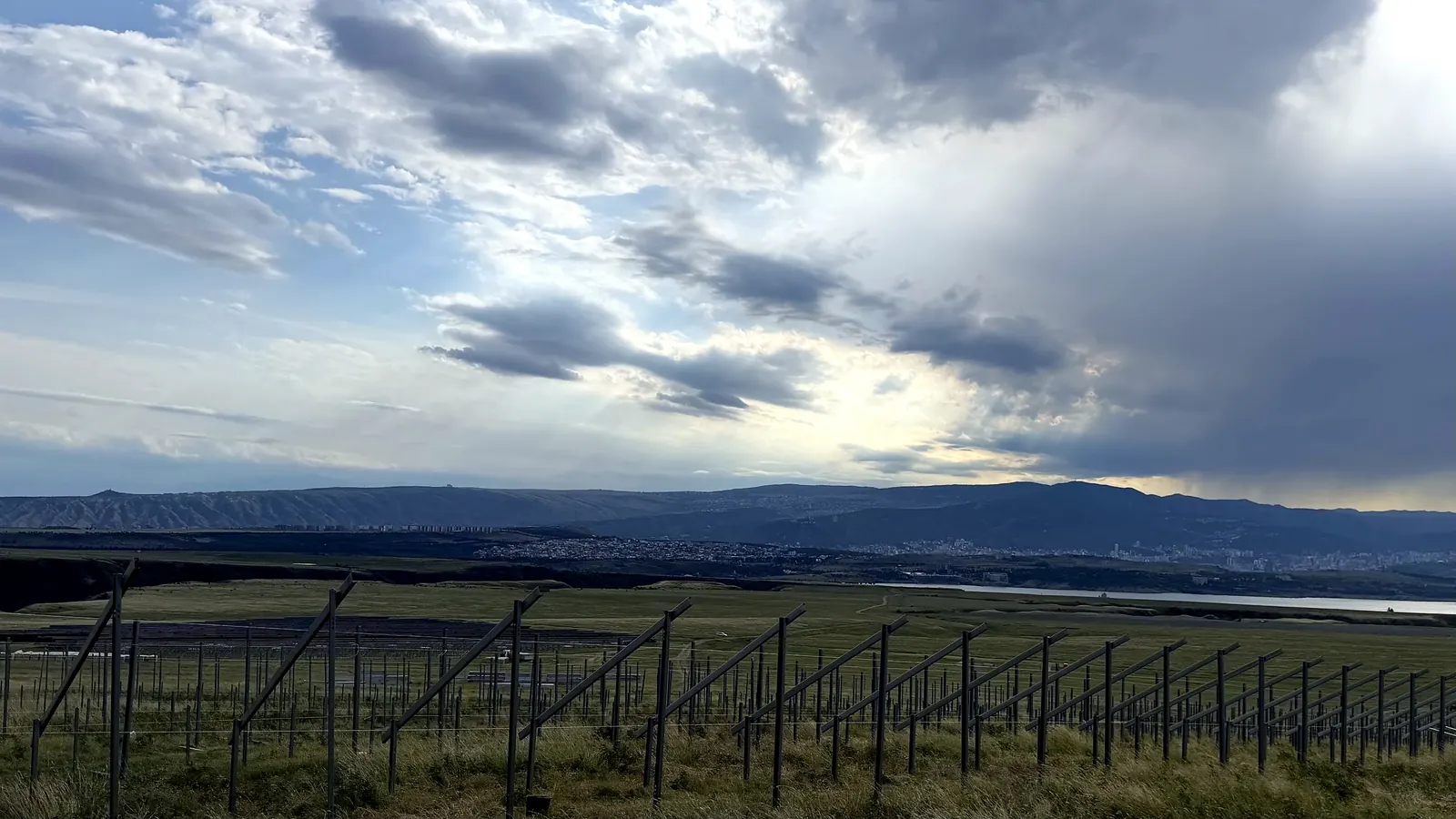
- Grid connection is the critical path. The plants were finished on 30 September 2026, but they cannot earn until the distribution company, Telasi, completes the connection. Agree the connection terms and timing before you build, and keep cash to cover the wait.
- Land and grid can cost more than the panels. In and around Tbilisi, land and connection made up 53% of our budget. Cheaper land further out often means a longer or costlier connection, and a weaker position for selling to city businesses.
- Local EPC prices are competitive. At about $300 per kWp turnkey, a Georgian EPC contractor delivered at a price that compares well with regional benchmarks.
- Small plants are bankable. TBC Bank financed most of the project, which shows that Georgian banks will lend against well-documented solar projects with private offtake.
- Model the rule risk. Net-metering projects depend on rules that can change. Build a downside case with a lower price and stress-test debt service against it.
Working with us on solar
Mukhiani One is our own capital at work. We use the same playbook for investors: site and land screening, grid connection, EPC selection, bank financing and offtake. If you are looking at a solar plant in Georgia, see our solar advisory and co-development services or get in touch.