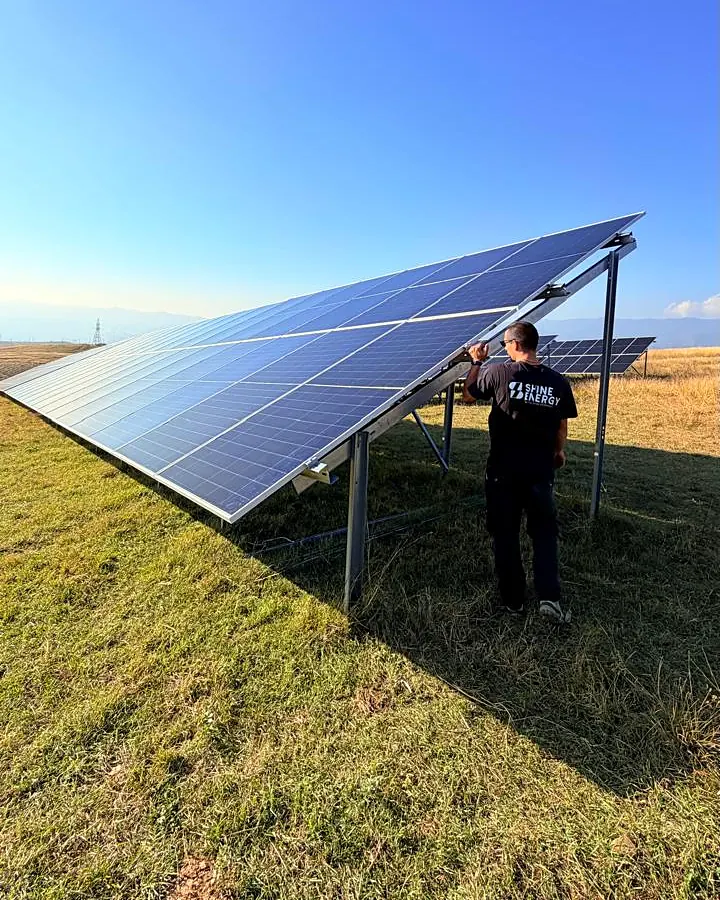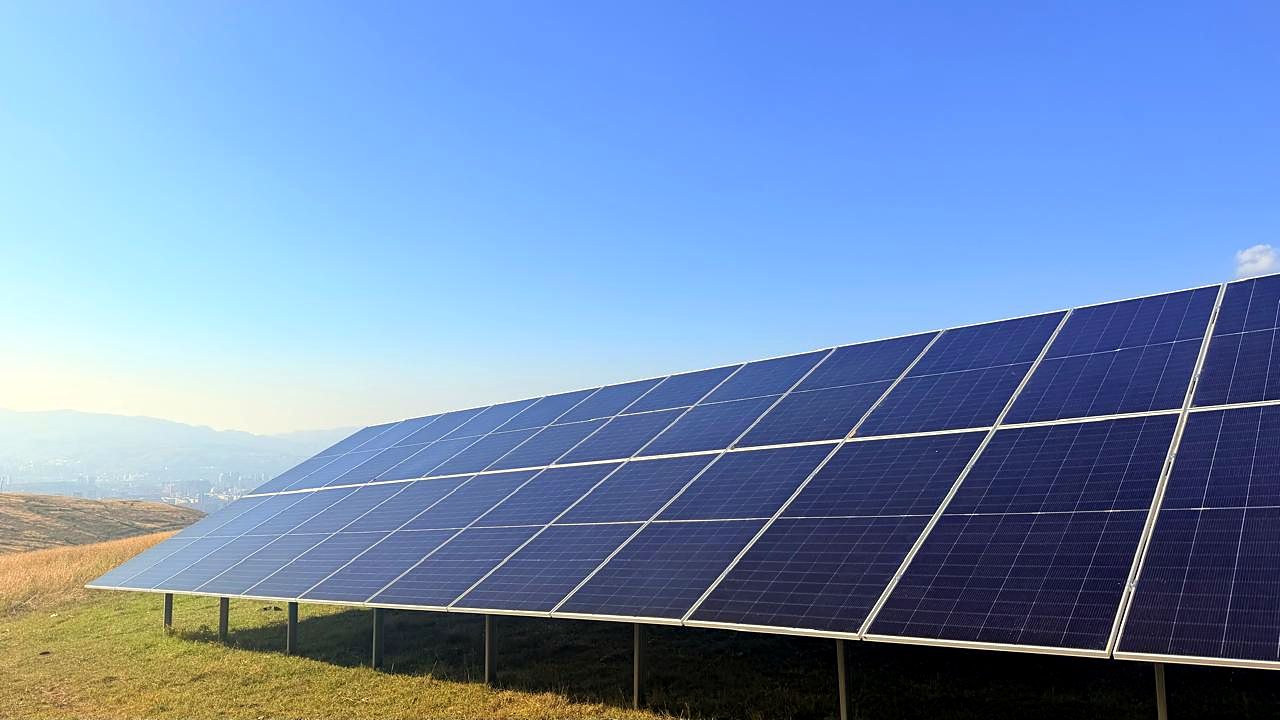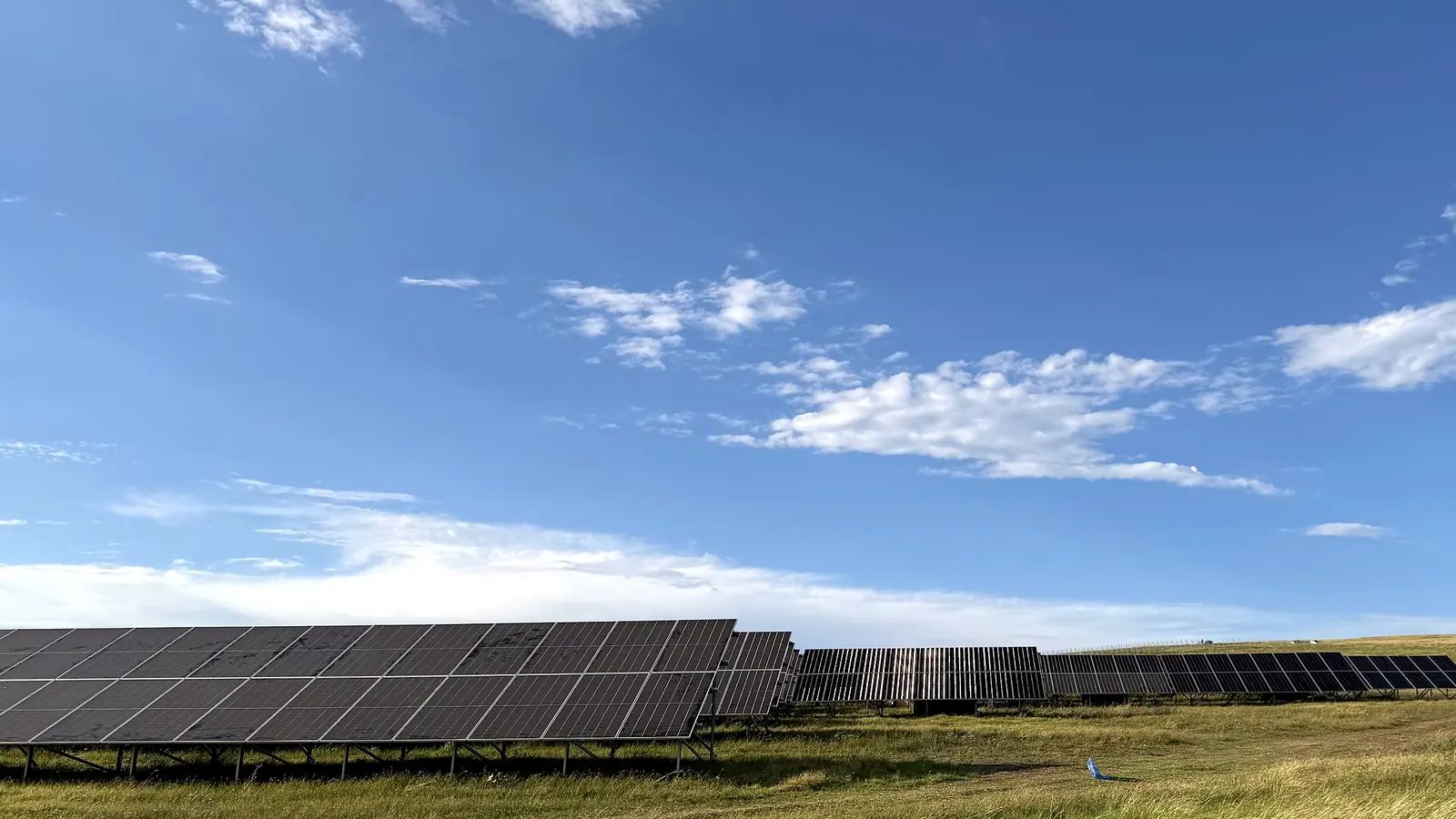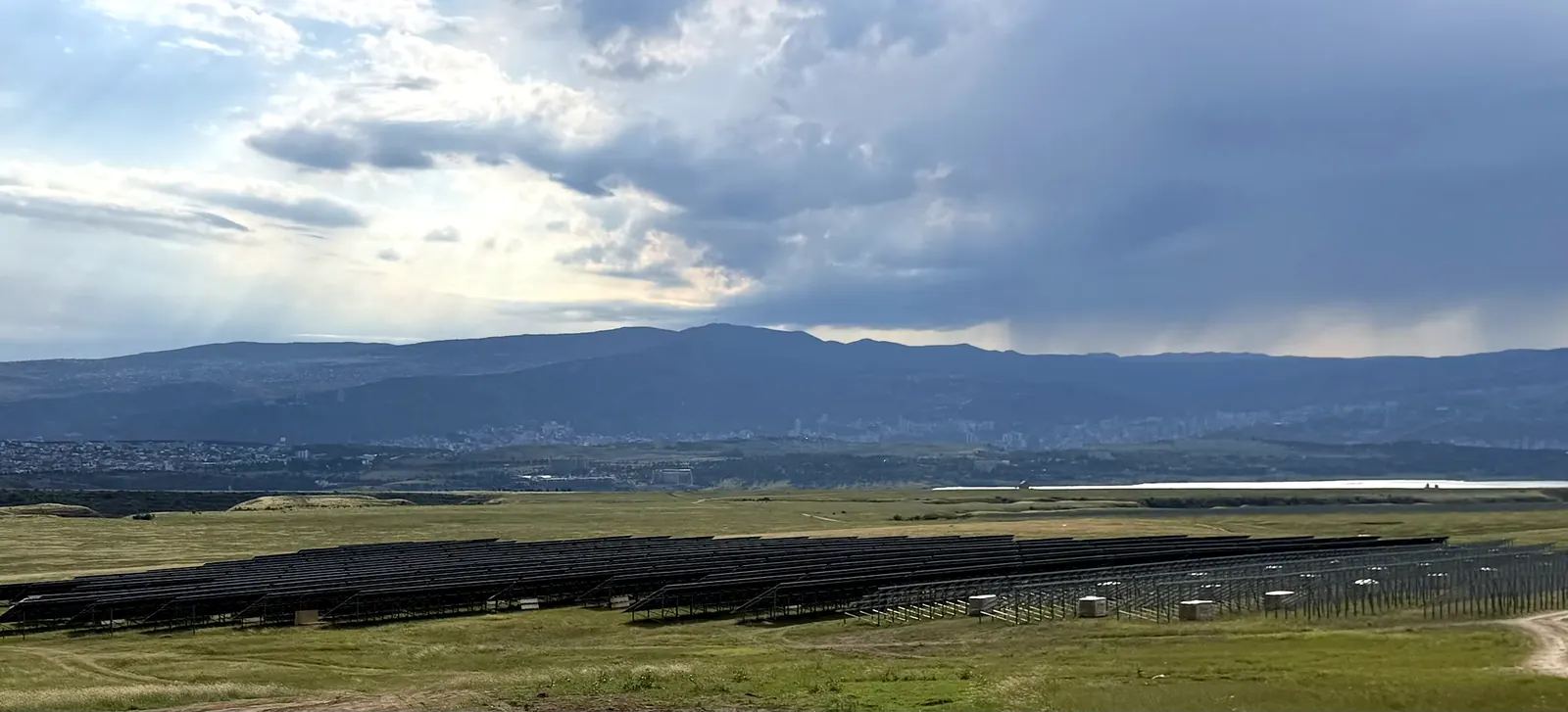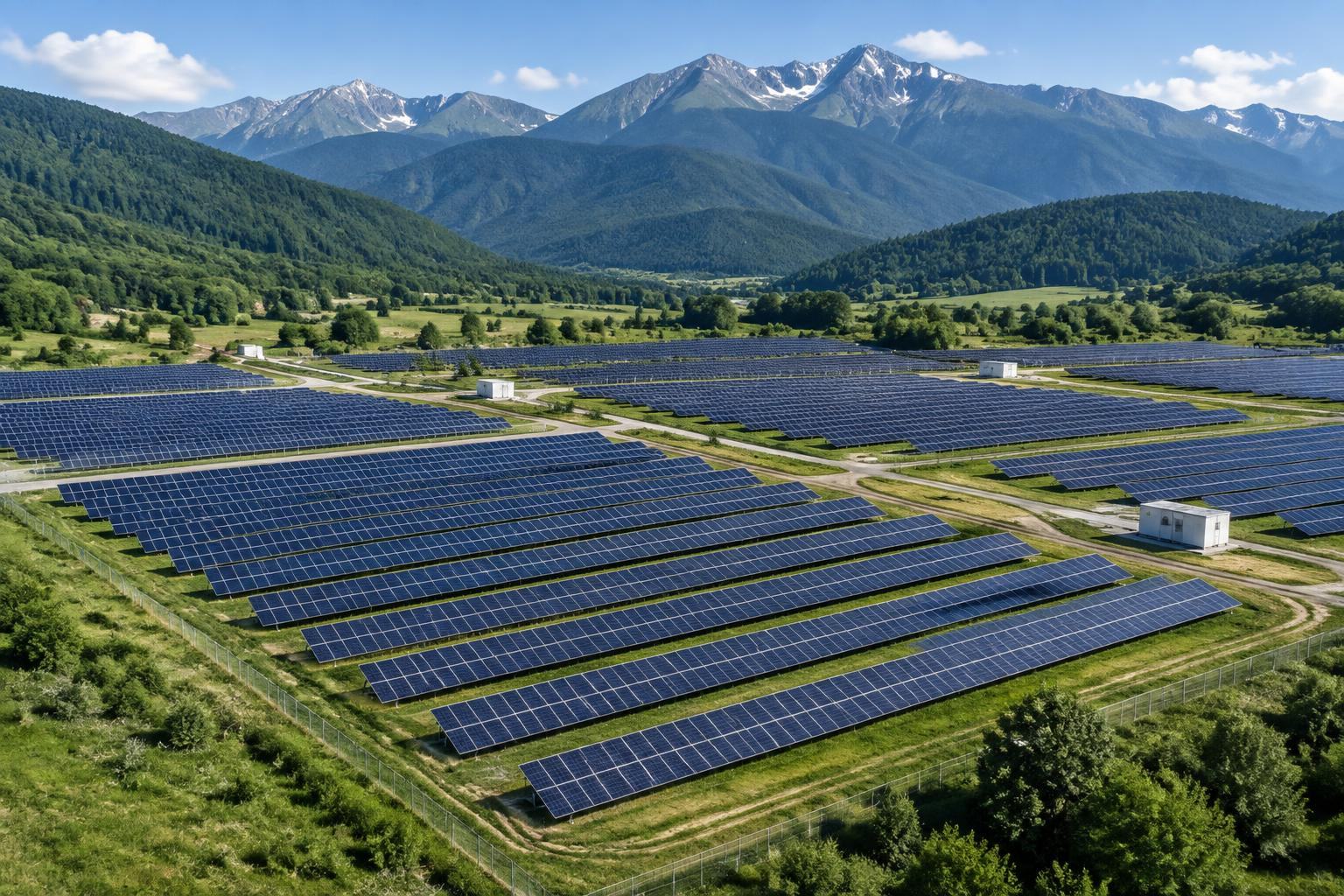
Solar energy is the fastest-moving segment of Georgia's power sector in 2026. Utility-scale plants are still small (10.8 MW of licensed solar at the end of 2025), but around 93 MW of small renewable plants already run under net metering, and a pipeline of 5–50 MW projects is reaching construction and bank financing. This guide covers the market, the rules for rooftop and commercial solar, real project yields and what investors should check. Figures are as of October 2026.
How much solar power does Georgia have?
| Segment | Capacity | Source |
|---|---|---|
| Licensed solar plants (end of 2025) | 10.8 MW, all added in 2025 | Galt & Taggart via renewables.ge |
| Net-metering microgeneration | 93 MW across 1,404 plants (Telasi 30 MW, Energo-Pro 63 MW) | GNERC data via EBRD GEFF |
| Wind and solar output, 2025 | 84 GWh, about 0.5% of national generation | renewables.ge |
Solar is therefore a small share of supply today, but it is the segment where most new projects are being built.
Projects to watch in 2026
| Project | Size | Location | Status |
|---|---|---|---|
| Veli solar portfolio | 52.8 MW (5 new plants, 40.6 MW; 5 operating, 12.2 MW) | Kakheti | EBRD approved up to USD 19.6 million in September 2026 (source) |
| First Light, Rustavi Azot | 24 MWp self-consumption, zero export, battery-ready | Rustavi | In development (source) |
| Udabno solar plant | 5 MW AC / 6.4 MWp, about USD 2.7 million | Sagarejo | Final construction, commercial operation targeted for September 2026 (source) |
| Mukhiani One (CEP) | 2.5 MW AC (5 × 500 kW) | Tbilisi | Built September 2026, awaiting grid connection (case study) |
| Step Energy pipeline | 75 MW | Various | Pipeline, incl. storage and agrivoltaics (source) |
How much electricity does a solar plant produce in Georgia?
Two 2026 projects give a useful benchmark for real-world output:
Yields are our calculation from the published figures. Eastern Georgia (Kakheti, Kvemo Kartli) is drier and sunnier, which is why most utility-scale projects cluster there. Every site still needs its own irradiation study and a P50/P90 yield estimate.
Solar yield by city: PVGIS data for Georgia
We ran the EU's PVGIS model (version 5.3, SARAH3 satellite data for 2005–2023) for 16 locations, using the same standard assumptions everywhere: 1 kWp of crystalline modules, fixed at the optimal tilt (35–37°), with 14% system losses. The result is the expected annual output per kWp, before any project-specific design (source).
| Location | Region | Annual yield (kWh per kWp) | January (kWh) | July (kWh) |
|---|---|---|---|---|
| Gori | Shida Kartli | 1,349 | 80 | 144 |
| Akhalkalaki | Samtskhe-Javakheti | 1,326 | 69 | 146 |
| Sagarejo | Kakheti | 1,322 | 78 | 144 |
| Rustavi | Kvemo Kartli | 1,305 | 76 | 140 |
| Udabno | Kakheti | 1,301 | 76 | 139 |
| Marneuli | Kvemo Kartli | 1,300 | 77 | 139 |
| Akhaltsikhe | Samtskhe-Javakheti | 1,288 | 80 | 132 |
| Tbilisi | Tbilisi | 1,279 | 73 | 139 |
| Gurjaani | Kakheti | 1,265 | 69 | 140 |
| Dedoplistskaro | Kakheti | 1,241 | 68 | 136 |
| Telavi | Kakheti | 1,224 | 76 | 131 |
| Kutaisi | Imereti | 1,217 | 67 | 126 |
| Zugdidi | Samegrelo | 1,200 | 64 | 124 |
| Poti | Samegrelo | 1,198 | 62 | 125 |
| Tsalka | Kvemo Kartli | 1,187 | 78 | 125 |
| Batumi | Adjara | 1,105 | 64 | 109 |
What the data shows:
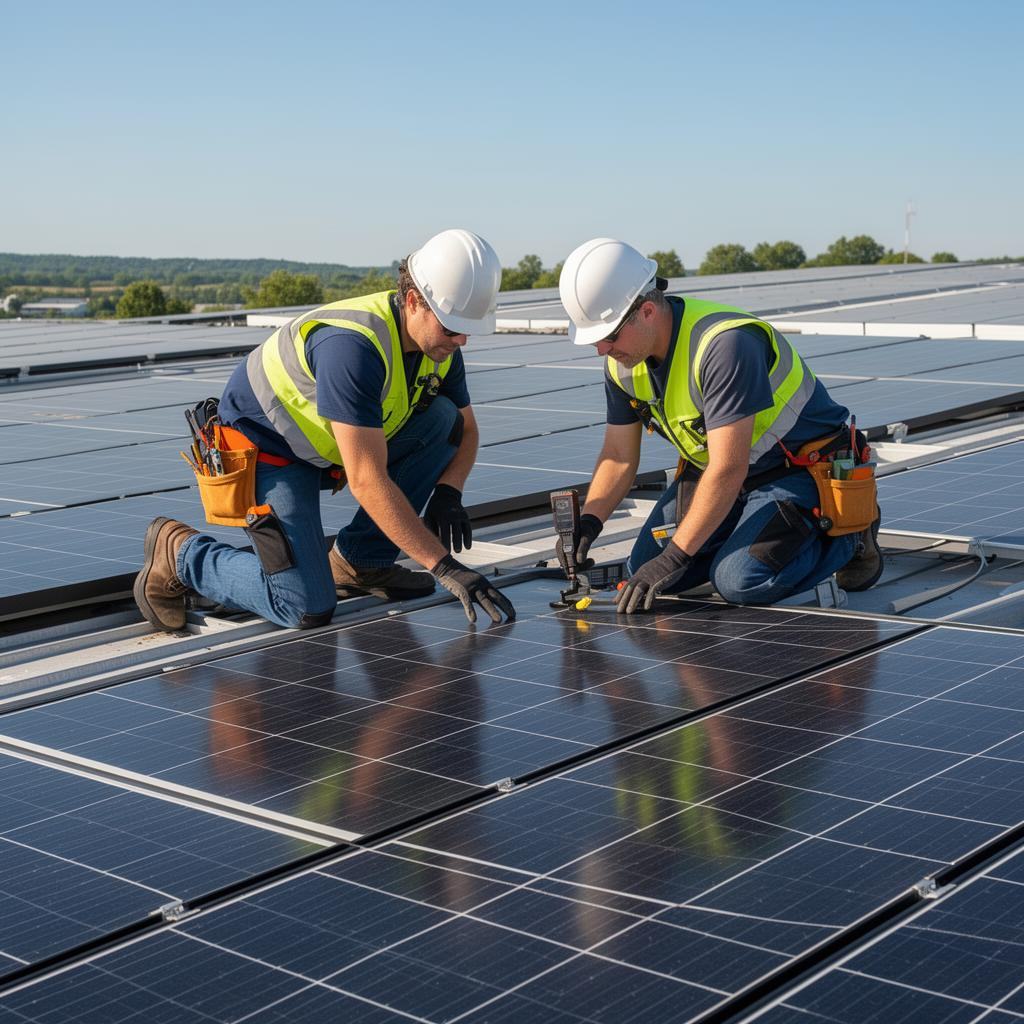
- The best sites are in central and eastern Georgia, at about 1,300–1,350 kWh per kWp: Shida Kartli (Gori), Kakheti (Sagarejo, Udabno), Kvemo Kartli (Rustavi, Marneuli) and the Javakheti plateau. Gori is as good as Kakheti.
- The Black Sea coast is 10–15% lower, at about 1,100–1,200 kWh per kWp.
- Winter output is about half of summer. A plant produces roughly 65–80 kWh per kWp in January against 125–145 in July, which matters for winter-heavy buyers and CfD revenue.
- These are conservative figures. With 10% losses instead of 14%, the model gives about 1,340 kWh per kWp in Tbilisi and 1,410 in Gori; plants with bifacial modules or trackers can do better still, which is how Udabno reports about 1,560. A bankable P50/P90 study should always replace the model for a real project.
Rooftop and commercial solar: net metering and net billing
Small renewable plants can connect to the distribution grid as microgeneration. The rules are changing:
- Net metering let owners offset exported and consumed kWh. Quotas are now exhausted in Energo-Pro areas (most of the regions), while some Tbilisi (Telasi) sites can still apply (source). Plants connected before 1 January 2027 keep it until 2033; see our net metering guide.
- Net billing pays exported electricity in money at roughly the wholesale price, about 6–10 tetri per kWh, while electricity bought from the grid costs a business about 35 tetri per kWh (source).
- May 2025 law changes: new systems under 100 kW connected from 1 January 2027 move to monthly net billing and lose their fee exemptions; systems connected before 2027 keep their current terms until 1 January 2033 (source).
What this means: a kWh you use yourself is worth three to six times more than a kWh you export. The best commercial projects are sized to the site's own daytime load, and batteries become attractive for evening use.
Illustrative example
A 100 kWp rooftop in eastern Georgia at about 1,500 kWh per kWp produces roughly 150 MWh a year. If 80% is used on site at 0.35 GEL/kWh, it saves about GEL 42,000 a year; exporting the other 20% at about 0.08 GEL/kWh adds only about GEL 2,400. This is an illustration, not a quote: check your own tariff, load profile and installation cost.
Utility-scale solar: auctions and financing
Larger plants sell through Georgia's renewable capacity auctions or bilateral contracts. In the first auction (2023), 10 of the 27 winning projects were solar (source); the second auction offered 195 MW for solar, including 70 MW for projects with storage (source). For how the auction support works, see our article on electricity market liberalisation and CfD auctions.
Development banks are active: the EBRD's Veli financing and local banks such as TBC funding projects like Udabno show that 5–50 MW solar portfolios are bankable in Georgia today. TBC Bank also financed our own 2.5 MW plant in Tbilisi; see the Mukhiani One case study for its real costs per kWp.
What investors should check
- Irradiation and yield: independent P50/P90 estimate, shading and soiling losses, degradation.
- Grid capacity: the connection point's capacity and the distribution or transmission upgrade cost.
- Offtake: auction terms, PPA tenor and currency, or the share of self-consumption for behind-the-meter projects.
- Curtailment: solar peaks at midday in spring and summer, when hydro output is also high.
- Land and permits: land title, agricultural land conversion where needed, and the environmental screening decision.
- Equipment and EPC: module and inverter warranties, protection and switchgear quality, and O&M terms.
Our technical due diligence covers these points; see also our guides to battery storage in Georgia, wind power plants and the energy asset due diligence checklist.
Considering a solar project or portfolio in Georgia? Contact our team.