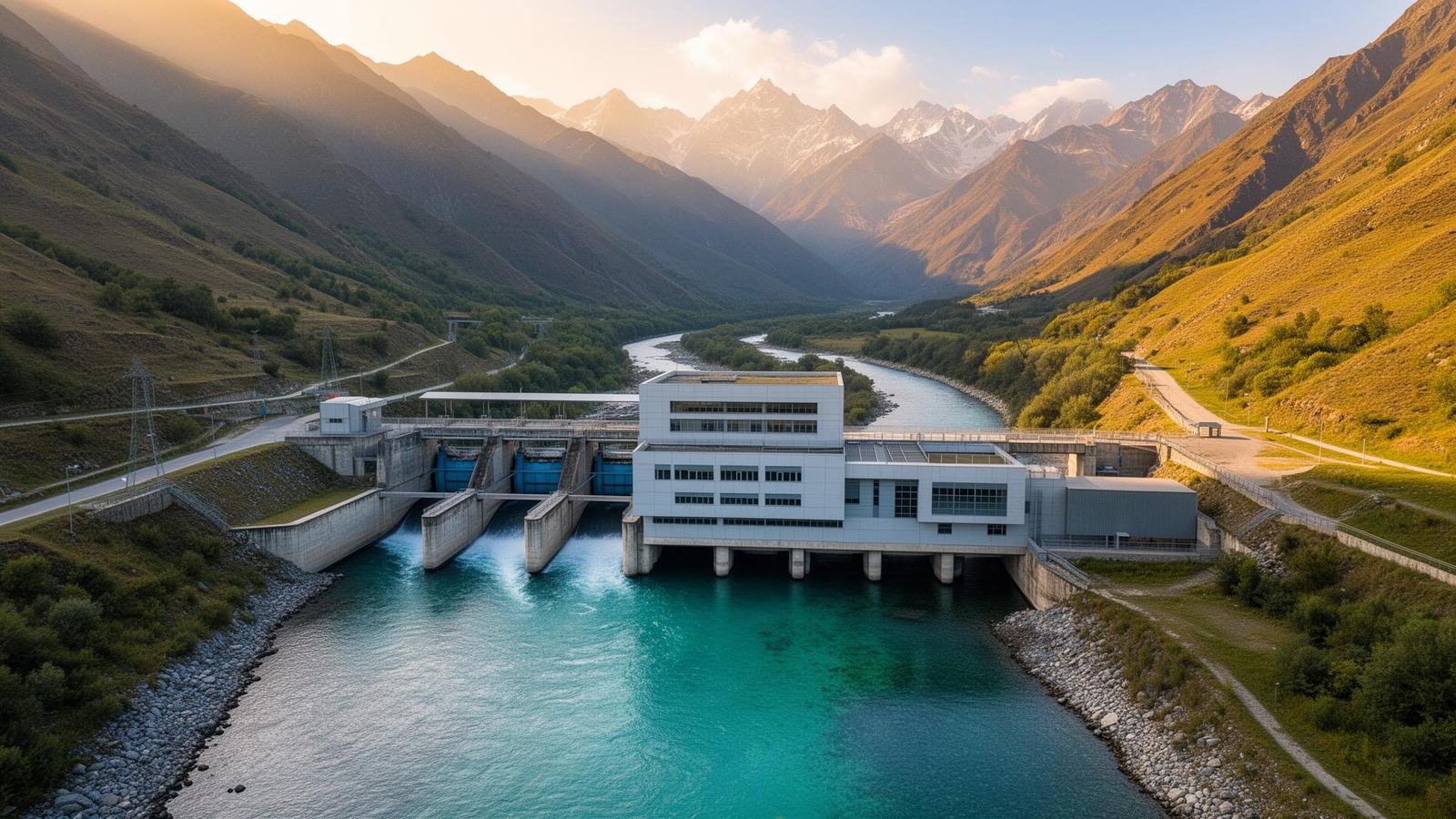
Hydropower is the backbone of Georgia's electricity system. At the end of 2025 the country had 3,489 MW of hydropower out of 4,675 MW of installed capacity, and hydro plants produced about 11 TWh of the 13.8 TWh generated that year, roughly 80% (source). Most of that comes from a dozen large plants. This list gives each one's capacity, river, year and owner, as of October 2026.
The largest hydropower plants in Georgia
| # | Plant | Capacity | River / region | Commissioned | Owner |
|---|---|---|---|---|---|
| 1 | Enguri HPP | 1,300 MW | Enguri, Samegrelo / Abkhazia | 1978 | Engurhesi LLC, state-owned |
| 2 | Vardnili HPP cascade | 220 MW (main plant) | Enguri, Gali district | 1970 | Vardnili HPP Cascade LLC, a subsidiary of Engurhesi |
| 3 | Vartsikhe HPP cascade | 184 MW (4 × 46 MW) | Rioni, Imereti | 1976–1987 | Georgian Manganese (source) |
| 4 | Shuakhevi HPP | 179 MW | Adjaristsqali, Adjara | 2017 | Adjaristsqali Georgia: Clean Energy Invest and Tata Power, with IFC (source) |
| 5 | Zhinvali HPP | 130 MW | Aragvi, Mtskheta-Mtianeti | 1986 | Georgia Global Utilities, owned by FCC Aqualia (source) |
| 6 | Lajanuri HPP | 113.7 MW | Lajanura, Racha-Lechkhumi | 1960 | Energo-Pro Georgia (source) |
| 7 | Khrami HPP I | 112.8 MW | Khrami, Kvemo Kartli | 1947 | Gardabani Holdings B.V., indirectly Inter RAO (source) |
| 8 | Khrami HPP II | 110 MW | Khrami, Kvemo Kartli | 1963 | Gardabani Holdings B.V., indirectly Inter RAO |
| 9 | Dariali HPP | 108 MW | Tergi, Kazbegi | 2017 | JSC Dariali Energy (source) |
| 10 | Paravani HPP | 87 MW | Paravani, Samtskhe-Javakheti | 2014 | Georgia Urban Energy: Anadolu Group 90%, EBRD 10% (source) |
| 11 | Dzevrula HPP | 80 MW | Tkibuli reservoir, Imereti | 1956 | Energo-Pro Georgia (source) |
| 12 | Gumati HPP cascade | 66.8 MW | Rioni, Imereti | 1950s | Energo-Pro Georgia |
Capacities are from the plant owners and the national list of power stations (source)). Ownership changes over time, so check the current register before relying on it in a transaction.
How much each plant generates
Capacity is only half the story. Run-of-river plants produce most of their energy in spring and summer, while reservoir plants can hold water for winter. Average annual output, 2012–2020 (source)):
| Plant | Average output | Type |
|---|---|---|
| Enguri | about 3,400 GWh (4,036 GWh in 2025, source) | Reservoir |
| Vartsikhe cascade | about 810 GWh | Run-of-river |
| Vardnili cascade | about 650 GWh | Downstream of Enguri |
| Lajanuri | about 390 GWh | Seasonal regulation |
| Zhinvali | about 320 GWh | Reservoir |
| Khrami II | about 310 GWh | Reservoir cascade |
| Gumati cascade | about 305 GWh | Run-of-river |
| Dariali | design output about 510 GWh | Run-of-river |
| Paravani | design output about 450 GWh | Run-of-river |
| Shuakhevi | design output about 450 GWh | Run-of-river |
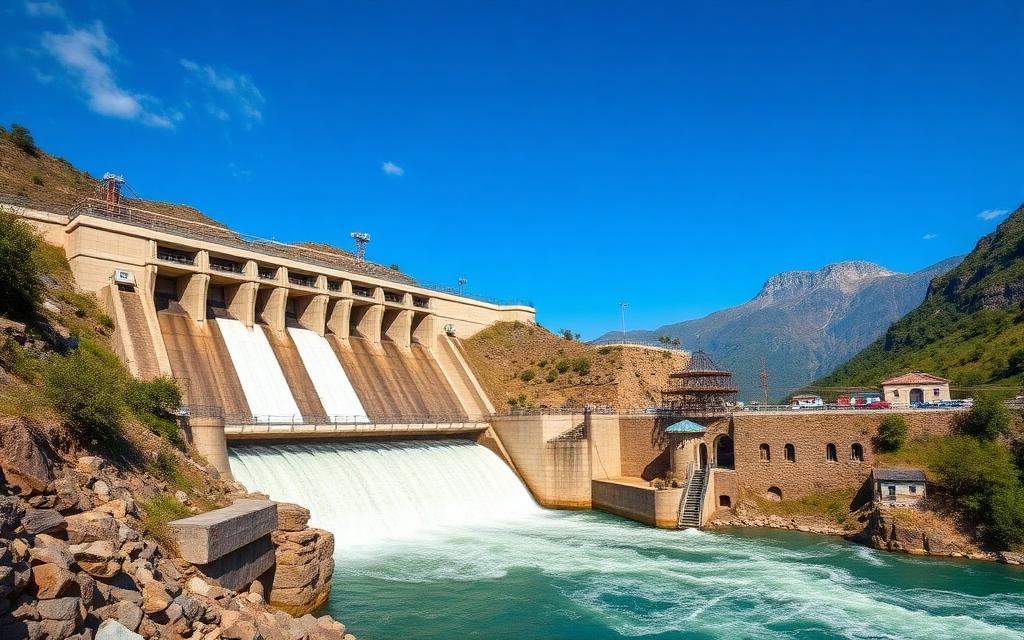
Enguri alone produces close to a third of all electricity in Georgia. Read our Enguri HPP guide for its dam, the supply arrangement with Abkhazia and the rehabilitation programme.
Who owns Georgia's hydropower
- The state. Enguri and the Vardnili cascade, the largest regulating capacity in the country.
- Energo-Pro Georgia. The largest private hydro owner, with Lajanuri, Dzevrula, Shaori, Gumati, Rioni, Zahesi, Chitakhevi, Ortachala, Atsi and other plants (source).
- Strategic and industrial owners. Georgian Manganese (Vartsikhe), FCC Aqualia through Georgia Global Utilities (Zhinvali and smaller plants, 149 MW in total), and Inter RAO through Gardabani Holdings (Khrami I and II). The EU added Inter RAO to its sanctions list in July 2026, which may affect transactions involving its Georgian subsidiaries (source).
- Project-finance owners. Shuakhevi, Dariali and Paravani were built after 2013 with EBRD, ADB or IFC funding.
- Hundreds of small plants. Plants under 13 MW, many built under guaranteed purchase agreements, make up a large share of the private market.
Projects in the pipeline
The largest planned plant is Nenskra HPP in Svaneti, designed at 280 MW and about 1,200 GWh a year (source). It has been delayed for years. New hydropower now competes for 15-year contracts for difference in state auctions; see how the CfD auctions work.
What this means for investors
- Large hydro rarely changes hands. The biggest plants are state-owned or held by long-term strategic owners. Deals happen mainly in the 5–100 MW segment. See our guide for institutional buyers and how to structure due diligence on a hydropower acquisition.
- Winter is the weak season. Run-of-river output falls sharply in winter, when Georgia imports power. This is why solar, which produces well in spring and autumn, and storage are a good fit with the hydro fleet. Read about solar energy in Georgia and our renewable energy overview.
- Ownership and sanctions matter. Check the ultimate owner of every counterparty, including grid and offtake companies.
Caucasus Energy Partners advises investors on hydropower and solar acquisitions and technical due diligence. Contact us to discuss a project.