Energy projects in Georgia succeed or fail with their stakeholders as much as with their engineering. Ministries and agencies issue the approvals, the regulator sets the rules, municipalities control local roads and land, villages decide whether a project feels like an opportunity or a threat, and lenders apply their own standards. This guide gives a practical stakeholder map for Georgian energy projects, a simple engagement plan and the mistakes that most often cause delays. Information is as of October 2026.
Stakeholder map for a Georgian energy project
| Stakeholder | Role | Influence |
|---|---|---|
| Ministry of Economy and Sustainable Development | Energy policy, renewable support auctions, memoranda with investors | High |
| Ministry of Environmental Protection and Agriculture and the National Environmental Agency | Environmental assessment, screening and the environmental decision (source) | High |
| GNERC | Generation licences above 15 MW, tariffs, market rules (source) | Medium to high |
| GSE and ESCO | Grid connection and dispatch; PPA or CfD counterparty | High |
| Municipality and local council (sakrebulo) | Local permits, roads, land, hearing logistics | Medium |
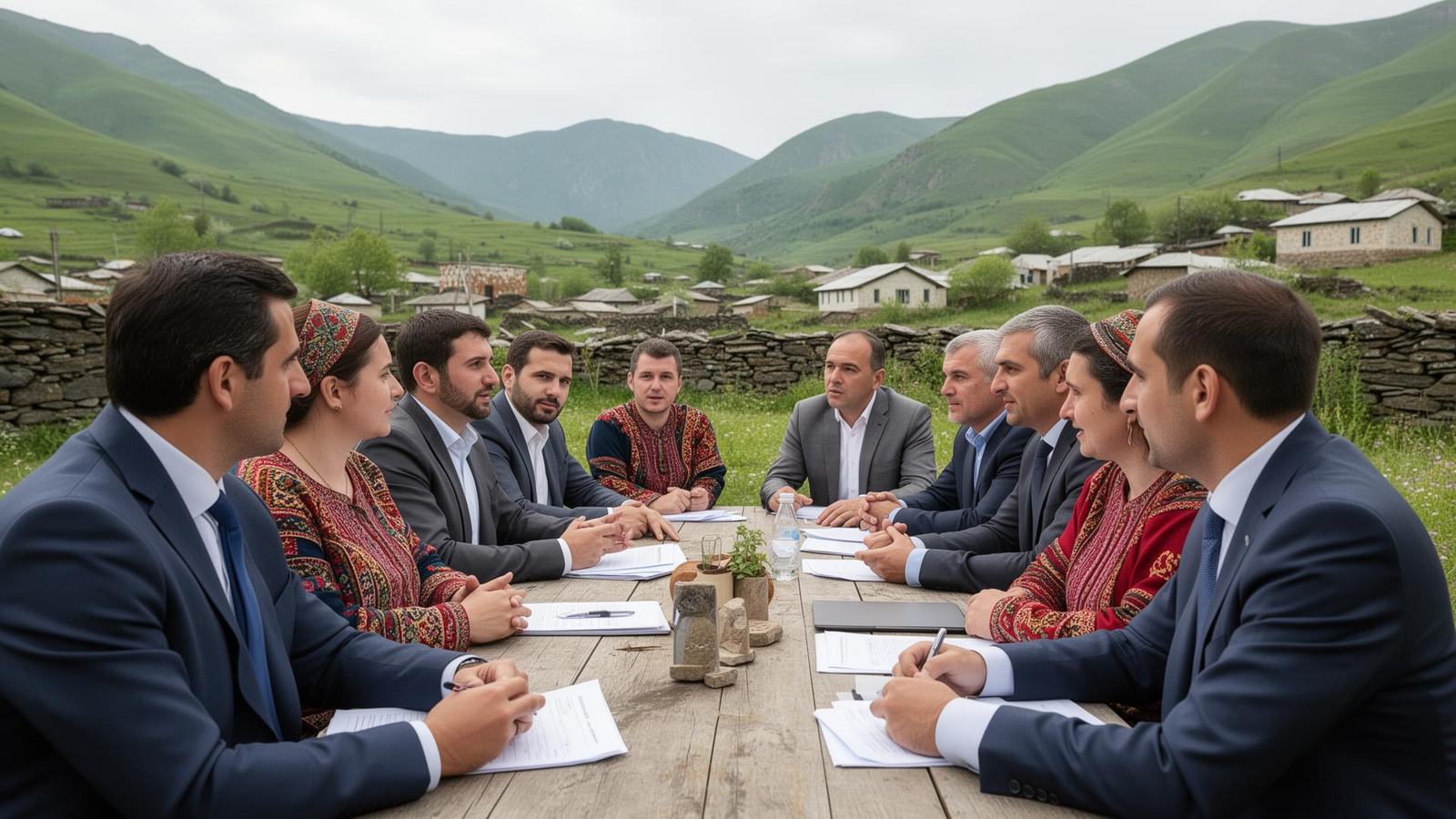
| Village residents and landowners | Land access, water use, daily impacts, social acceptance | High, often underestimated |
| Environmental NGOs and media | Scrutiny of biodiversity, river flows, transparency | Medium to high |
| Lenders (EBRD, ADB, IFC, local banks) | Financing conditional on E&S standards | High |
| Contractors and suppliers | Delivery, local hiring, safety | Medium |
Why it matters: a recent example
The Namakhvani hydropower project in western Georgia faced more than 200 days of protests. In September 2021, its developer ENKA terminated its agreement with the government (source). Projects rarely fail because one approval is missing; they fail when trust is lost before construction starts.
A simple stakeholder engagement plan
- Map stakeholders early, before the scoping stage of the environmental assessment, and rate each by influence and concern.
- Appoint a local liaison who speaks Georgian, knows the area and is present on site.
- Disclose early and clearly: maps, timeline, land needs, water use, jobs and impacts, in Georgian and in plain language.
- Use the formal process properly. Under the Environmental Assessment Code, scoping is discussed in public 10–15 days after the application is published, the public has 40 days to comment on the EIA report and a public hearing follows (source). Hold extra meetings in the villages, not only the legal minimum.
- Set up a grievance mechanism with response deadlines, and log every complaint and answer.
- Agree commitments in writing: local hiring, roads, water, community investment. Keep a commitments register.
- Report back regularly during construction and operation, including monitoring results.
Working with government
- Understand who decides what: policy and auctions sit with the Ministry of Economy, environmental decisions with the environmental agency, licences and tariffs with GNERC, connections with GSE.
- Follow procedures and document every submission; timelines are set in law but depend on complete files.
- Build relationships at both national and municipal level; local authorities shape how a project is received.
Common mistakes
- Starting engagement at the public hearing, when positions are already fixed.
- Overpromising jobs or benefits that the project cannot deliver.
- Ignoring critics: respectful engagement with NGOs and opponents usually reduces conflict.
- Treating engagement as a one-off: relationships need attention throughout construction and operation.
- Inheriting problems unknowingly: when buying a project, check what previous owners promised.
How to measure it
| Indicator | Why it helps |
|---|---|
| Grievances received, resolved and time to resolve | Shows whether problems are handled before they escalate |
| Share of local workers and local procurement | Tracks visible local benefit |
| Commitments delivered on time | Tests credibility |
| Attendance and questions at meetings | Shows real participation, not formality |
For environmental and social standards in detail, see our guide to ESG for hydropower in Georgia; for approvals, see power plant permits in Georgia and our hydropower risk framework.
Our ESG and regulatory advisory teams help investors map stakeholders, plan engagement and review community risk before they commit.
Need support with stakeholders on a Georgian energy project? Contact us.